
The choice between a socket-weld and slip-on flange affects fit-up, internal geometry, inspection access, fabrication time, and resistance to vibration and thermal cycling. By the end, you will be able to select the attachment type for a small-bore process line and write a purchase specification that covers size, rating, material, facing, bore, and documentation.
Key takeaways
- Use socket-weld flanges for clean, controlled small-bore fit-up.
- Choose slip-on flanges when faster alignment and lower fabrication effort matter.
- Match flange class, bore, schedule, material, and facing to the piping design.
- Specify standards, dimensions, inspection documents, and delivery requirements to Mumbai suppliers.
How do socket-weld and slip-on flanges differ during fit-up and welding?
The choice between a socket weld and a slip on flange starts with the pipe fit. A socket-weld flange receives the pipe into a machined socket; a slip-on flange slides over the pipe, leaving the pipe free to pass through the flange bore.
| Option | Pipe fit and weld location | Bore geometry | Installation sequence |
|---|---|---|---|
| Socket-weld flange | Pipe stops inside the socket; one external fillet weld joins pipe to flange | The pipe end sits against a socket shoulder, leaving a specified expansion gap and an internal crevice | Verify pipe wall and socket dimensions, insert the pipe to the required depth, set the expansion gap, align the flange face, then make the external weld |
| Slip-on flange | Pipe passes through the flange; welds join the outside and the bore side | The bore-side weld can project into the flow path and requires access for inspection | Slide the flange over the pipe, set projection and face squareness, tack-align, weld the outside, then complete the internal weld |
A slip-on flange is usually quicker to align because it can move along the pipe before welding. That convenience still demands controlled weld sequencing and a square flange face. Check for internal weld intrusion in flow-sensitive or pigged lines.
For a socket-weld flange, NPS alone does not establish fit. Match the pipe schedule or wall thickness to the socket bore and depth, and specify the facing separately; raised face, flat face, or ring-type joint dimensions must also match.
Which flange is the practical choice for a small-bore process line?
Choose a socket weld flange for NPS ½ through NPS 2 when fabrication space is tight, external welding is easier to control, and the service has low vibration and limited thermal cycling. For NPS 3 or 4, compare field access and inspection time closely; a slip-on flange often becomes easier to align, weld, and examine.
| Selection factor | Socket weld flange | Slip-on flange |
|---|---|---|
| Flow path | No internal flange-bore weld bead; usually smoother | Internal weld can disturb flow or obstruct pigging |
| Crevice and dead-leg risk | Socket shoulder and expansion gap retain fluid or solids | Pipe-to-flange joint can also retain deposits, but no socket pocket |
| Fabrication access | One external fillet weld suits restricted access | Sliding fit simplifies alignment; outside and bore welds need access |
| Vibration and fatigue | Avoid for severe vibration, pulsation, or cyclic thermal loads | Better only when weld quality and geometry are controlled; neither is ideal for severe fatigue |
| Practical choice | Compact, low-cycle, clean-service small-bore branches | Accessible fabrication where speed, alignment, or inspection dominates |
For small bore flange selection, do not use NPS alone. Match the pipe schedule to the socket bore and depth, then check the process fluid for chloride, sour, wet-gas, or solids-related retention.
The phrase socket weld flanges vs slip on flanges in Mumbai should not turn into a stock or delivery decision. Freeze the standard, class, facing, material, bore, and socket dimensions before comparing availability.
How do ASME class, pipe schedule, material, and facing change the selection?
Compatibility depends on more than choosing a socket weld or slip on flange. ASME B16.5 covers steel flanges from NPS 1/2 through NPS 24; larger sizes generally require ASME B16.47 or another specified standard. Confirm the NPS, dimensional standard, pressure class, material group, design temperature, facing, and bore together.
| Option | Selection check | Consequence |
|---|---|---|
| Socket-weld flange | Match socket bore and depth to pipe schedule or wall thickness | An NPS 2 flange can still be wrong if the pipe does not seat correctly |
| Slip-on flange | Match the flange bore and pipe outside diameter to the specified schedule | A loose or mismatched bore alters alignment and weld geometry |
| Either type | Use the ASME B16.5 pressure-temperature table for the material group and class | Changing attachment type does not increase the flange rating |
A Class 300 flange is not automatically suitable at every temperature. Verify the ASTM material grade, allowable pressure at the design temperature, and compatibility with the pipe and weld procedure. The piping design still controls cyclic life and joint qualification.
Treat facing as a separate choice. The proposed socket weld or slip on flange must match the mating flange’s face dimensions, bolt pattern, and gasket arrangement; changing the attachment type does not correct a facing mismatch. A ring-type-joint face, for example, cannot use the same gasket arrangement as a raised-face joint.
When does fabrication or inspection make one attachment type preferable?
A socket-weld flange is preferable when limited access makes internal welding impractical; a slip-on flange is preferable when quick alignment and easier field fit-up matter more.
| Attachment type | Fabrication and inspection effect | When it applies |
|---|---|---|
| Socket weld | The machined socket locates the pipe; one external fillet weld leaves the flange face less exposed to internal weld spatter. The socket shoulder and expansion gap remain an internal crevice, and the weld root is difficult to access. | Compact fabrication areas, small-bore lines, and installations where internal welding is impractical |
| Slip-on | The flange slides over the pipe, simplifying alignment, but weld sequencing must control flange squareness and distortion. Outside and bore welds create a second inspection point and a possible internal bead or flow obstruction. | Faster field fit-up, readily available stock, and lines where bore access permits internal welding and examination |
For a socket weld flange comparison in Mumbai, do not let stock availability decide the attachment. Confirm the flange face remains protected during fit-up, specify the examination method for each weld, and check whether visual inspection, liquid penetrant testing, magnetic particle testing, or radiography is practicable for the joint geometry.
Choose a weld neck flange for high cyclic stress, severe vibration, pulsation, rapid thermal changes, or demanding sour, chloride, wet-gas, or solids-bearing service. Its butt-welded transition removes the socket crevice and provides a more inspectable, fatigue-tolerant load path; a socket-weld or slip-on flange can leave stagnant fluid, stress concentration, or an inaccessible weld root.
What should you specify when buying a process-line flange in Mumbai?
Freeze the purchase specification before comparing quotes from a process-line flange supplier in Mumbai. Nominal size alone cannot identify a correct flange: an “NPS 2 socket-weld flange” can still have the wrong socket bore, class, facing, or material.
1. State the dimensional standard: ASME B16.5 for NPS 1/2 through NPS 24; check ASME B16.47 or the project standard for larger sizes.
2. Give the NPS, pipe schedule or wall thickness, and bore. For socket-weld flanges, include the socket diameter and depth so the pipe seats correctly without creating an unintended internal step.
3. Specify the ASME pressure class, such as Class 150, 300, or 600, and the facing: raised face, flat face, or ring-type joint. Attachment type does not determine facing compatibility.
4. Name the material grade and purchase specification, such as ASTM A105, A182 F304, or A182 F316, with any heat-treatment requirement.
5. Require a material test certificate showing the heat number, chemical analysis, mechanical results, and traceability from flange to material.
6. Request dimensional inspection records, visual and marking checks, and required NDE or heat-treatment records.
7. State whether IBR documents are required. IBR certification applies when the line or component falls within Indian Boiler Regulations scope; an ordinary process-line flange is not automatically an IBR item.
For a socket weld flange comparison in Mumbai, give every supplier this same data. When requesting a quote from Mahesh Industries, attach the piping class and inspection plan rather than comparing price on “socket-weld” or “slip-on” alone.
Related products
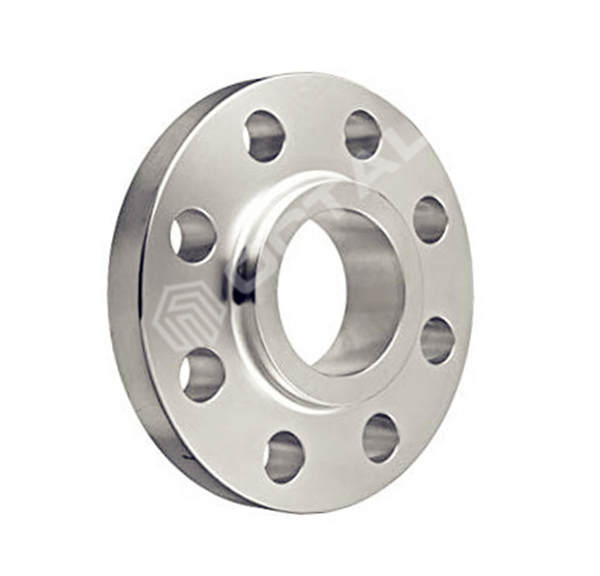 | Slip On Flanges Mahesh Industries is a prominent manufacturer and supplier of premium-quality slip-on flanges, widely used in various industrial piping systems. View product → |
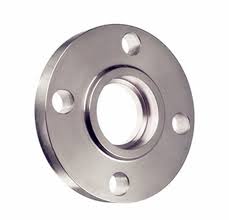 | Socket-Weld-Flanges Mahesh Industries is a leading manufacturer and supplier of high-quality socket weld flanges, known for their precision engineering and durability. View product → |
Frequently asked questions
How do socket-weld and slip-on flanges differ during fit-up and welding?
A socket-weld flange receives the pipe into a machined socket and uses a fillet weld. A slip-on flange slides over the pipe and uses welds at the hub and bore.
Which flange is the practical choice for a small-bore process line?
Socket-weld flanges suit small-bore lines when controlled fit-up, a clean bore, and reduced alignment work matter. Use slip-on flanges when simpler installation and lower fabrication effort are priorities.
How do ASME class, pipe schedule, material, and facing change the selection?
Select the ASME B16.5 pressure class, flange material, pipe schedule, bore, and facing together. The flange must match the design pressure, temperature, corrosion service, and connected pipe dimensions.
When does fabrication or inspection make one attachment type preferable?
Socket-weld connections need controlled insertion depth and inspection of the fillet weld and internal pipe end. Slip-on flanges simplify fit-up but require inspection of both hub and bore welds.
What should you specify when buying a process-line flange in Mumbai?
State socket-weld or slip-on type, ASME B16.5 class, nominal size, pipe schedule and bore, material grade, facing, standard, quantity, testing, documents, and delivery location.