
A refinery flange must do more than connect two pipes: it must match the pressure class, temperature, material, facing, gasket, bolts, and maintenance plan. By the end, you will know what ASME B16.5 standardizes, how engineers select the correct class and flange type, and which documents separate a compliant component from a vague “international standard” claim.
Key takeaways
- Match flange class to pressure, temperature, and service conditions.
- Select facing and flange type for sealing, alignment, and maintenance needs.
- Specify material, dimensions, testing, certification, and traceability before purchase.
- Use standardized flanges to reduce replacement delays during refinery turnarounds.
What ASME B16.5 standardizes for refinery piping
ASME B16.5 gives refinery piping a common physical interface. It covers pipe flanges and flanged fittings from NPS 1/2 through NPS 24, so compatible components can connect without project-specific drilling, bolt patterns, or mating hardware. Those are the core ASME B16.5 flange benefits for petrochemical refineries.
The standard specifies:
- Outside diameters, bolt circles, and bolt-hole sizes
- Flange thicknesses, bores, and facing dimensions
- Pressure-temperature ratings and material groups
- Dimensional and manufacturing tolerances
- Marking requirements
- Testing requirements
This consistency supports procurement and replacement of valves, fittings, piping sections, strainers, heat exchangers, and instruments. A replacement with the correct NPS, class, bore, facing, and material can match the existing assembly, reducing alignment work during construction or a turnaround.
Petrochemical flanges above NPS 24 require a separate size check. ASME B16.47 covers large-diameter steel flanges from NPS 26 through NPS 60, so do not specify B16.5 automatically for large headers or vessel connections. The wrong standard can produce mismatched bolt circles or unusable replacement hardware.
B16.5 is a dimensional and rating standard, not a complete refinery piping design code. It does not determine pipe wall thickness, flexibility, supports, corrosion allowance, or the complete line design. Those decisions remain under the applicable piping code and project specification.
How refinery engineers choose among Class 150 and Class 300 through Class 2500
Class 150, Class 300, Class 400, Class 600, Class 900, Class 1500, and Class 2500 are pressure classes, not pressure values in psi. The class number ranks the flange’s pressure capability within ASME B16.5; it does not mean that a Class 300 flange holds 300 psi at every temperature.
| Class | What the designation means | Selection basis |
|---|---|---|
| Class 150 | Lowest listed pressure class | Use only when the material and design-temperature table meets the line’s design pressure |
| Class 300 | Higher capability than Class 150 | Confirm the tabulated rating; it is not automatically 300 psi |
| Class 400 | Intermediate class | Match the rating to design pressure and temperature |
| Class 600 | High-pressure class | Check the specified material group and facing |
| Class 900 | Higher-pressure service | Use the applicable pressure-temperature table |
| Class 1500 | Very high-pressure service | Confirm flange, bolting, gasket, and piping specification compatibility |
| Class 2500 | Highest listed class | Reserve for conditions that require its tabulated rating |
Start with the line’s design pressure and design temperature, not pipe size alone. Locate the ASME B16.5 pressure-temperature table for the specified material group and read the allowable pressure at that temperature. As temperature rises, material strength falls, so the allowable flange pressure usually falls too.
Then confirm the facing arrangement, material group, and piping specification agree. The flange rating does not replace pipe wall-thickness calculations under ASME B31.3 or the applicable piping design code. Those calculations address the pipe, while the flange class addresses the standardized flange connection.
These checks deliver key asme b16 5 flange benefits for petrochemical refineries. They also prevent an asme flange for refinery piping from being accepted on its class number alone.
Which flange type and facing suit the refinery service
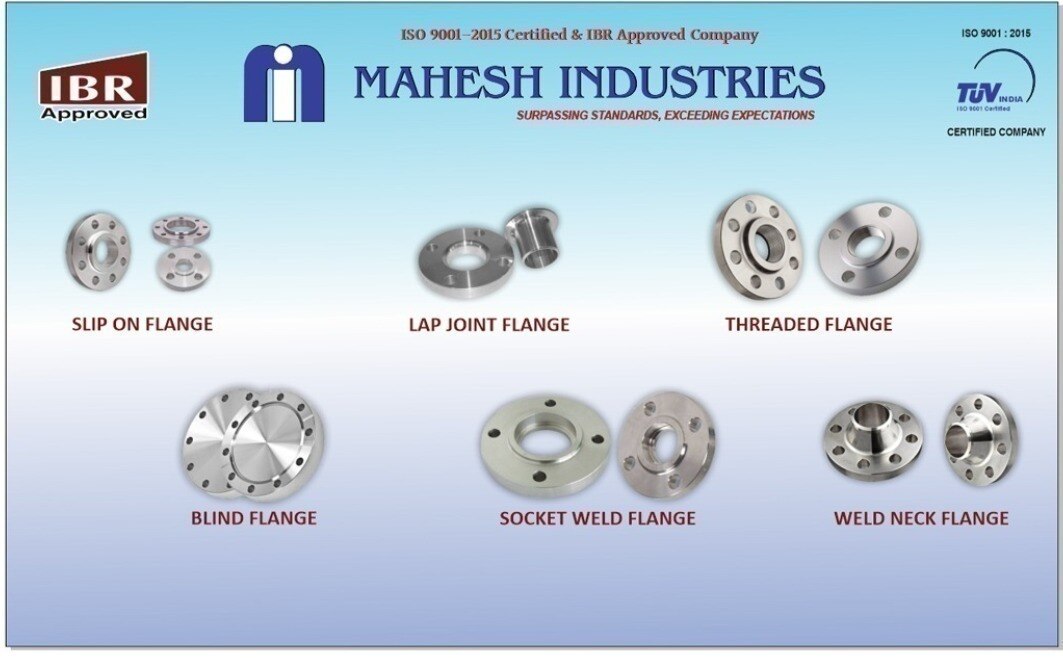
A weld-neck flange is the usual choice for demanding cyclic, high-temperature, or high-stress service because its tapered hub transfers loads more gradually into the pipe and helps maintain alignment. The trade-off is greater welding, inspection, machining, and installation effort than simpler petrochemical flanges.
| Flange type | Service and maintenance consequence |
|---|---|
| Weld-neck | Best for cyclic or high-stress lines; requires qualified butt welding, inspection, and accurate alignment. |
| Slip-on | Reduces fabrication effort; its bore step and lower fatigue resistance limit use in severe cyclic service. |
| Socket-weld | Suits small-bore pressure lines; restricted welding access and the internal crevice demand careful fit-up and corrosion review. |
| Blind | Provides a removable pressure closure for line ends, equipment nozzles, and isolation points; removal requires depressurisation and bolt access. |
| Threaded | Avoids welding where welding is impractical; use is limited by leakage and fatigue concerns at threads. |
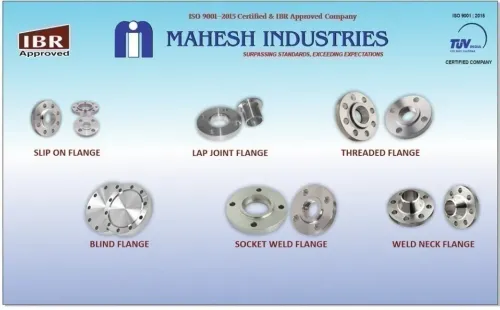
| Lap-joint | Works with a stub end when frequent dismantling, rotation, or alignment adjustment matters; the stub end carries the wetted service. |
Choose the facing with its mating flange, gasket, bolt loading, and face condition. Raised-face pairs concentrate gasket compression; flat-face pairs need a full-face gasket and controlled bolting to avoid flange bending; ring-type-joint faces use a metallic ring gasket in matching grooves and demand undamaged, clean surfaces.
ASME B16.20 covers metallic gaskets, while ASME B16.21 covers nonmetallic flat gaskets. An ASME flange for refinery piping can meet dimensional requirements and still leak if the gasket, alignment, surface finish, or bolt preload is wrong.
What to put in a refinery flange purchase specification
Build the purchase specification from the line list and piping class, not from the phrase “ASME B16.5 flange.” State each item below before requesting a quotation:
1. Record NPS, pipe schedule or flange bore, pressure class, facing, design or service temperature, corrosion allowance, and gasket type. Match the facing and gasket to the adjoining flange and process fluid.
2. Name the material grade and manufacturing route. ASTM A105 identifies carbon-steel forgings; ASTM A182 covers forged or rolled alloy and stainless-steel products. Neither replaces the full requirement. “Forged” alone proves nothing about sour service, low-temperature toughness, high-temperature hydrogen service, or resistance to a corrosive stream.
3. Specify bolting material, heat treatment, impact testing where required, supplementary inspection, marking, and documentation. Require heat-number traceability, material test certificates, dimensional inspection records, specified test records, and markings that match the order.
4. Separate ASME B16.5 compliance from IBR approval and a vague “international standard” claim. B16.5 addresses dimensions, ratings, materials, marking, and testing; IBR approval concerns applicable Indian Boilers Regulations requirements and the exact component, material, and facility.
When comparing an asme b16 5 flange supplier in mumbai, ask Mahesh Industries or another supplier to identify every deviation before manufacture. The asme b16 5 flange benefits—interchangeable dimensions and known ratings—appear only when the purchase data, certificates, and markings agree.
Related product
 | Asme B16.5 Flanges Mahesh Industries is a trusted manufacturer, supplier, and exporter of ASME B16.5 flanges, designed to meet global standards for pressure and... View product → |
Why standardization reduces refinery turnaround risk
A known bolt pattern and replacement envelope shorten turnaround work: crews can remove an isolation valve, strainer, instrument, heat exchanger, or piping section without designing mating hardware or drilling in the field. That interchangeability is among the main asme b16 5 flange benefits for petrochemical refineries.
| Feature | Standardized condition | Turnaround consequence |
|---|---|---|
| Bolt pattern | Matching bolt circle and holes | Faster removal and repeatable bolt-up |
| Facing | Matching raised face, flat face, or ring-type joint | Correct gasket seating and compression |
| Bore and envelope | Matching bore, thickness, and outside dimensions | Less alignment adjustment and easier replacement |
Standard bores reduce internal steps that disrupt flow and prevent a replacement from fitting the adjoining pipe. Consistent facings also let you specify the correct gasket under ASME B16.20 or ASME B16.21, then apply a controlled tightening sequence.
The benefit disappears with mixed standards, incompatible raised-face or ring-type-joint arrangements, nonmatching bores, undocumented substitutions, damaged faces, incorrect bolting, or uncontrolled bolt preload. Leakage, forced alignment, damaged gaskets, and repeat removal follow.
Standard dimensions also make inspection records easier to compare with the line list and piping specification. Markings, material records, flange dimensions, gasket details, and bolt data expose a mismatch before equipment returns to service.
That predictability explains why refineries use standardized petrochemical flanges: one known dimensional and rating system supports procurement, installation, inspection, replacement, and maintenance. It does not replace engineering checks for pressure, temperature, materials, alignment, gasket selection, or joint assembly.
Frequently asked questions
What does ASME B16.5 standardize for refinery piping?
ASME B16.5 standardizes pipe flange and flanged fitting dimensions for NPS 1/2 through NPS 24, including pressure classes, bolt patterns, dimensions, and facing details.
How do refinery engineers choose between Class 150 and Class 2500?
They compare the piping design pressure and temperature with the applicable ASME B16.5 pressure-temperature rating, then account for material, fluid service, and operating conditions.
Which flange type and facing suit refinery service?
Weld neck, slip-on, socket weld, blind, and lap joint flanges serve different installation and maintenance needs; raised face, flat face, and ring-type joint facings suit different sealing and service conditions.
What belongs in a refinery flange purchase specification?
Specify ASME B16.5, NPS, pressure class, flange type, facing, material grade, schedule or bore, dimensions, heat treatment, inspection, testing, marking, and material certificates.
How does flange standardization reduce refinery turnaround risk?
Standard dimensions and bolt patterns improve interchangeability, simplify spares planning, reduce fit-up problems, and speed replacement during scheduled maintenance.