
Choosing a long weld neck flange is not just a matter of matching nominal pipe size. You need to decide whether its extended neck solves a real vessel, temperature or alignment problem, then specify the bore, weld end, facing, material, standard and compliance documents precisely enough to compare supplier quotations. By the end, you will have a practical checklist for selecting the flange and reviewing a Mumbai supplier’s offer.
Key takeaways
- Choose a long weld neck flange for extended butt-welded hub clearance.
- Specify flange standard, size, pressure class, bore and face before comparing prices.
- Confirm material grade and whether the flange is IBR-approved or non-IBR.
- Check bore alignment and weld-end dimensions before installation.
When a Long Weld Neck Flange Is the Right Connection
Choose a long weld neck flange when the connection needs an extended, butt-welded hub between the flange face and the pipe or vessel neck. The added length provides clearance through insulation, moves the weld away from a vessel wall, and supports a controlled transition at high-temperature, high-pressure, nozzle, and header connections.
| Option | What it means | When it applies |
|---|---|---|
| Long weld neck flange | Extended hub with a butt-weld end | Vessel nozzles, insulated lines, high-pressure piping, or connections needing extra neck length |
| Standard weld neck flange | Tapered hub with a shorter butt-weld connection | Normal pipe-to-flange service where added clearance or reinforcement is unnecessary |
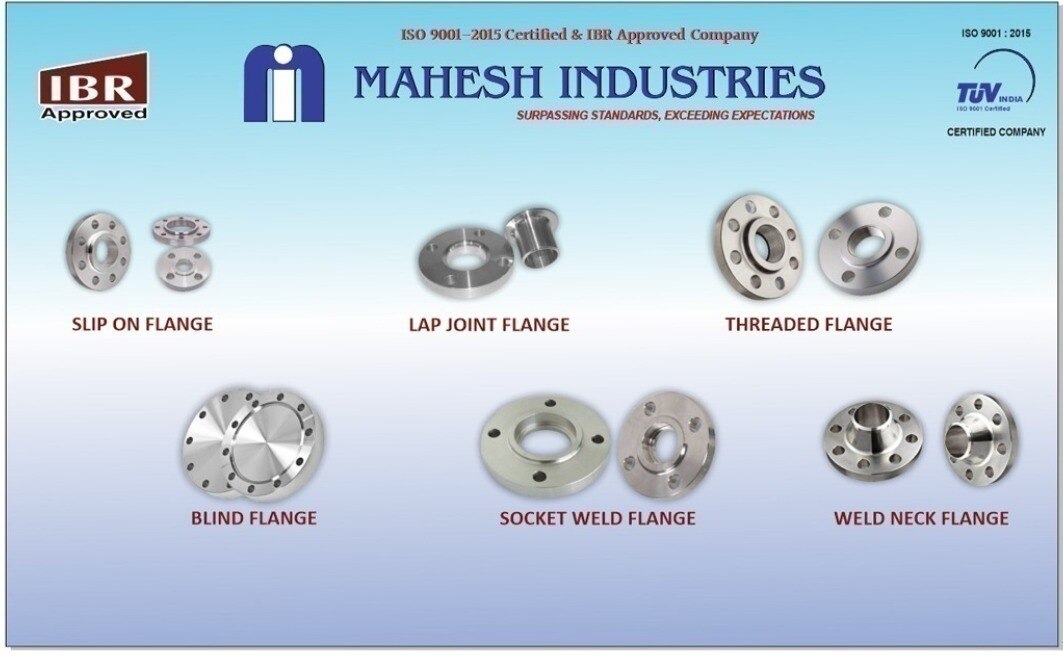
| Slip-on flange | Pipe passes through the flange and is fillet-welded | Lower-cost, lower-severity service where fatigue and stress concentration are limited |
| Socket-weld flange | Pipe enters a socket and receives a fillet weld | Small-bore, moderate-pressure service where internal bore access permits this joint |
| Forged nozzle | Forged vessel or equipment nozzle, often designed as an integral connection | Use when the vessel designer requires a compact forged nozzle rather than a detachable pipe flange |
Do not select an LWN solely because the nominal size matches. Pipe schedule changes the inside diameter, so ask a long weld neck flange supplier for a matching or custom bore and confirm whether an internal weld transition is needed. Specify the required neck length; “long weld neck” does not define it.
Choose the extra metal only when it delivers clearance, stress control, or vessel-interface value.
Specify Long Weld Neck Flange Dimensions Before Comparing Prices
The flange must match the pipe outside diameter and wall thickness, the mating flange’s face and bolt pattern, and the system’s pressure-temperature rating. Specify nominal pipe size or actual outside diameter, pressure class or PN rating, facing type, material grade, bore or pipe schedule, quantity, and required inspection before requesting prices.
| Standard | Size coverage | What to confirm |
|---|---|---|
| ASME B16.5 | NPS 1/2–24; Classes 150–2500 | Flange dimensions, facing, bolt circle and pressure-temperature rating |
| ASME B16.47 | NPS 26–60 in its stated classes | Large-bore series, facing, bolt pattern and rating; do not substitute a B16.5 table |
| Project or custom design | Outside standard limits or special geometry | Controlled drawing, design-code calculation and purchaser approval |
Request the long weld neck flange dimensions on a controlled drawing, not only the outside diameter and bolt-circle diameter. Include flange thickness, bolt-hole quantity and diameter, raised-face dimensions, hub outside diameter, overall neck or tangent length, bore, and butt-welding-end dimensions.
Confirm whether the bore is standard schedule, matching bore, or custom, and check it against the pipe inside diameter to avoid an internal step.
State the weld-end preparation separately. ASME B16.25 covers butt-welding-end preparation; it does not define the complete flange dimensions or pressure-temperature rating. IBR status also does not replace these details: an IBR flange still needs a defined standard, material, rating, bore and weld geometry.
Choose the Material and Confirm IBR or Non-IBR Status
Start with the service conditions, not the words “carbon steel,” “stainless steel,” or “IBR flange.” Design temperature, pressure, fluid chemistry, corrosion allowance, weldability and the governing design code determine the material grade and rating. A Class 600 designation is not a universal pressure value; ASME B16.5 pressure-temperature ratings change with the material group and temperature.
| Driver | Material and compliance effect | What to confirm |
|---|---|---|
| Temperature and pressure | Select a grade and pressure class whose ASME rating covers the design case | Design temperature, pressure, material group and rating table |
| Fluid and corrosion | Chlorides, sour service, acids and wet steam can rule out carbon steel or require NACE controls | Chemical composition, corrosion allowance and NACE MR0175/ISO 15156 requirement |
| Design code | The code controls allowable stress, testing, welding and documentation | ASME B31.1, ASME B31.3, EN rules or the project specification |
| Manufacturing route | Forged carbon-steel components commonly use ASTM A105/A105M; alloy and stainless flanges commonly use ASTM A182/A182M | Exact grade, heat treatment and supplementary requirements |
| IBR service | The material, manufacturing route and end use may require Indian Boiler Regulations inspection and certification | IBR authority’s scope and documentation requirements |
For an IBR order, request the material certificate, heat or cast number, traceability records, inspection endorsements and applicable IBR documents. “IBR approved” printed on a quotation proves nothing by itself.
For non-IBR service, specify the required ASME, ASTM, EN, NACE and client inspection requirements. Also state the flange standard and weld-end preparation: ASME B16.25 covers butt-welding ends, not complete flange dimensions or ratings. Confirm the bore against the pipe schedule; nominal NPS alone cannot establish internal diameter.
Build a Purchase-Ready Long Weld Neck Flange Quote
A usable long weld neck flange quote must let you compare identical parts, not merely compare a price per kilogram. If you plan to buy long weld neck flanges in Mumbai, send the supplier a controlled drawing and require these items in the returned long weld neck flange quote:
1. State the NPS or pipe outside diameter, ASME B16.5 or ASME B16.47 dimensional standard, pressure class or PN rating, facing, material grade, bore or pipe schedule, quantity, overall neck length, hub dimensions and butt-welding-end preparation. Include flange outside diameter, thickness, bolt-circle diameter, hole count and hole diameter.
2. Separate inspection from the base price. Ask the supplier to mark each item as included, excluded or optional for heat-treatment records, dimensional report, PMI, ultrasonic examination, radiography, hydrostatic testing, permanent heat identification, packing, marking and third-party inspection. Require a material test report linking chemistry and mechanical results to the component’s heat number.
3. Specify the receiving address and delivery basis separately from technical compliance. Identify ex-works, FOR, delivered-to-site or another agreed basis, then record freight, taxes, packing standard, dispatch date, partial-shipment permission and damage responsibility.
ASME B16.25 covers butt-welding-end preparation; it does not define complete flange dimensions or pressure-temperature ratings. Treat “B16.25 compliant” alone as incomplete. A long weld neck flange manufacturer in Mumbai, including Mahesh Industries, should be asked to confirm the controlled drawing against your pipe outside diameter and wall thickness before order release.
Related product
 | Long-Weld-Neck-Flanges Mahesh Industries, based in Navi Mumbai is a trusted name in the manufacturing of Long Weld Neck (LWN) Flanges, known for precision, strength, and... View product → |
Check Bore Alignment and Weld-End Fit Before Installation
Verify the controlled drawing against the actual pipe before welding: the extended hub must accept the specified butt-weld end, and its bore must continue the pipe inside diameter without a step.
1. Confirm the flange’s bore, hub outside diameter, neck length and butt-welding-end dimensions. Compare the bore with the pipe’s actual outside diameter and wall thickness, not its nominal NPS alone. Check whether it is a standard-schedule bore, matching bore or custom bore.
2. Inspect the hub and pipe end for dents, laminations, burrs, rust and ovality. Clean both surfaces, then check the flange face, raised face and bolt holes for damage. ASME B16.25 weld-end preparation does not replace checking the complete flange drawing.
3. Slide the pipe into the extended hub and align their centerlines. Set the specified root gap and internal transition required by the approved welding procedure; a sudden internal step creates turbulence, stress concentration and a collection point for corrosion.
4. Fit the mating flange with the correct gasket and rotate it until every bolt hole aligns naturally. Use a straightedge, level and flange-alignment tools to check face parallelism and centerline position. Never draw a misaligned flange into place by tightening bolts.
5. Tack-weld only after the bore, face and bolt-hole alignment pass inspection. Complete the butt weld using the approved procedure, control heat input to limit distortion, and recheck flange-face runout and bore continuity after welding.
6. Record the flange heat number, material certificate, dimensional checks and weld inspection results before installation. Reject the assembly if the face is warped, the bore has an unacceptable step or the weld-end fit differs from the drawing.
Frequently asked questions
When is a long weld neck flange the right connection?
Use one when you need an extended butt-welded hub for insulation clearance, vessel-wall separation, or high-temperature and high-pressure connections.
Which long weld neck flange dimensions should you specify?
Provide the standard, nominal size, pressure class, flange thickness, hub length, bore, facing and weld-end dimensions.
How do you choose IBR or non-IBR long weld neck flanges?
Match the flange status to the piping or boiler application, then request the material documentation and IBR licence records required for inspection.
What should a long weld neck flange quote include?
Ask for the quantity, dimensions, material grade, IBR or non-IBR status, facing, testing documents, delivery terms and price.