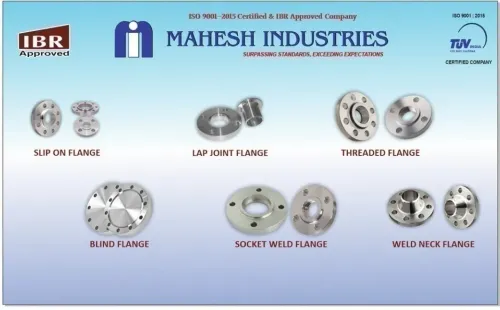

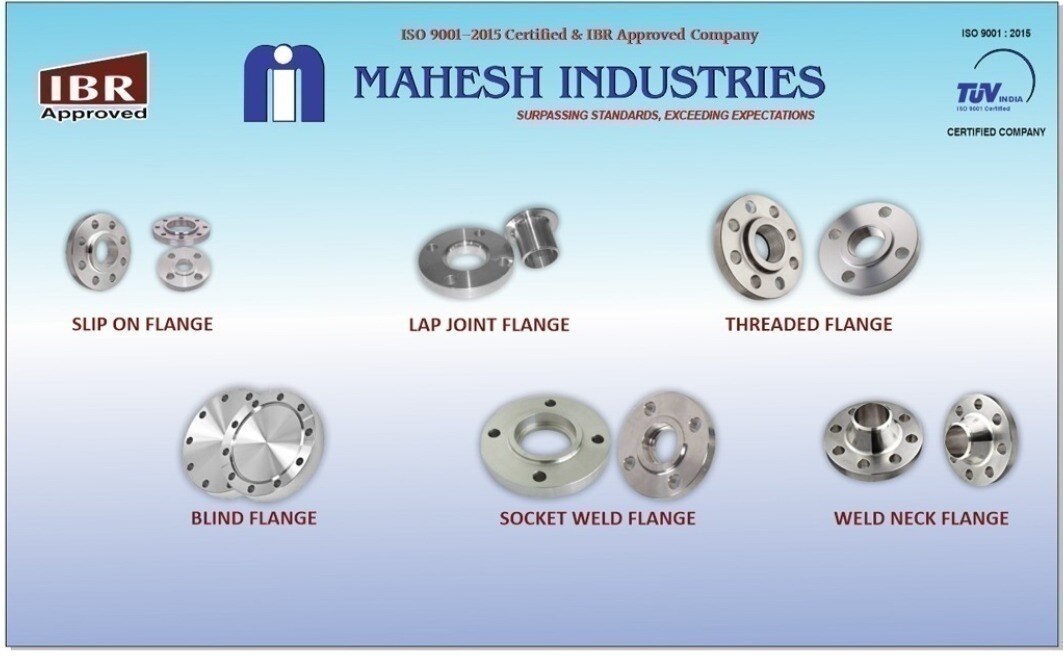
A lap-joint assembly is not just a loose flange: the pipe, stub end, backing flange, gasket and bolts work together, and each part affects sealing, inspection and cost. By the end, you can define the correct standard, dimensions, materials, documents and delivery requirements before requesting comparable quotes in Mumbai.
Key takeaways
- The stub end, not the loose lap flange, presents the sealing face.
- Match flange dimensions, pressure class, facing and material to the piping specification.
- Inspect welds, gasket contact, bolt alignment and flange rotation before commissioning.
- Request drawings, material certificates, inspection records and a clear delivery schedule.
What actually seals in a lap-joint flange assembly?
The pipe carries the process, but the stub end presents the sealing face. The stub end is butt-welded to the pipe, and its projecting lap seats against the gasket at the mating flange.
The loose backing flange surrounds the stub end, supplying bolt holes, alignment and clamping support; it is not the primary process-facing sealing component.
A weld-neck flange differs because the flange itself is welded directly to the pipe and forms the flanged connection. With a lap joint, request both components as one assembly:
- Specify the pipe bore, outside diameter and wall thickness so the stub-end bore and weld transition match.
- Specify the stub end with its material, lap dimensions and facing; do not accept a quotation listing only a loose backing flange unless you will source the stub end separately.
- Match the backing flange, gasket and bolts to the mating flange, pressure class and service conditions.
- Confirm the facing before ordering: RF needs compatible gasket dimensions, surface finish and controlled bolt-up; FF needs a full-face gasket and matching flat faces; RTJ needs the specified ring, groove geometry and ring material.
The loose flange can rotate around the stub end, which helps align bolt holes, but it does not correct a poor weld or distorted sealing face. Anyone planning to buy lap joint flanges in Mumbai should treat the pipe, stub end, backing flange, gasket and bolts as one engineered joint.
How do you install and inspect the joint on site?
A reliable lap-joint connection starts with dimensional checks, not bolt tightening. The rotating flange simplifies field alignment, but it cannot correct a wrong stub end, distorted weld or mismatched gasket.
1. Confirm the pipe schedule, outside diameter, stub-end bore and wall transition. Match the stub end to the specified RF, FF or RTJ facing and the mating flange.
2. Butt-weld the stub end to the pipe using the approved welding procedure specification. Complete the required visual, dimensional and non-destructive examination before assembly.
3. Check weld acceptance, pipe-end squareness and stub-end lap dimensions. Slide the loose backing flange over the pipe and stub-end assembly only after these checks pass.
4. Rotate the flange until its bolt holes align with the mating flange. Do not force the pipe into position or use the bolts to pull a distorted stub end into alignment.
5. Place the specified gasket on the correct facing. An RTJ joint needs the specified ring and groove geometry; an RF or FF joint needs matching gasket dimensions and surface finish.
6. Insert compatible bolts and tighten in a cross-pattern through staged passes, finishing at the project torque or bolt-load requirement. Follow the approved lubrication instruction.
7. Record flange parallelism, uniform gasket compression, bolt engagement, flange rotation, weld examination records and leakage-test status. Confirm nothing contacts or can damage the sealing face.
Give these controls to any lap joint flange supplier in Mumbai before delivery.
Which dimensions and standards belong on your purchase specification?
A nominal pipe size is only the starting point. Your lap joint flange quote must identify the dimensional standard, pressure class and mating facing, because RF, FF and RTJ components are not interchangeable simply because their NPS matches.
Specify the loose flange with:
- NPS; pipe outside diameter; wall thickness or schedule
- Pressure class; flange standard; flange outside diameter
- Bolt-circle diameter; bolt-hole count; hole diameter
- Bore; flange thickness; facing type and finish
- Material, quantity, marking and inspection requirements
Specify the separate stub end with its bore, outside diameter, lap thickness, overall length and facing geometry. State whether the facing is RF, FF or RTJ. An RTJ assembly needs the specified groove geometry and ring type; an RF or FF assembly needs compatible gasket dimensions, surface finish and bolt-up control.
| Standard | Scope | What to check |
|---|---|---|
| ASME B16.5 | NPS 1/2 through NPS 24; Classes 150, 300, 400, 600, 900, 1500 and 2500 | Use its tabulated flange and facing dimensions |
| ASME B16.47 | Larger nominal sizes | Compare series and project-specified dimensions |
| ASME B16.9 | Butt-weld stub ends | Confirm the stub-end geometry and pipe fit |
| ASME B16.48 | Line blanks and spacers | Check it when either belongs in the piping arrangement |
For sizes above NPS 24, use ASME B16.47 or the project’s named standard instead of extrapolating B16.5 dimensions. A matching NPS alone does not make RF, FF or RTJ parts compatible.
How should material, rating and construction be selected for service?
Pressure class is only the starting point. A Class 600 flange does not allow 600 psi at every temperature: pressure-temperature capability depends on the dimensional standard, material group, operating temperature, facing, gasket, bolting and the weakest component in the assembled joint.
| Choice | Main advantage | Checks before selection |
|---|---|---|
| Carbon steel | Lower cost for compatible fluids | Corrosion allowance, sour service, low-temperature toughness and external exposure |
| Stainless steel | Better corrosion resistance | Chloride attack, crevice corrosion, galvanic pairing and temperature limits |
| Alloy steel | Strength at demanding temperature or chemistry | Exact alloy grade, heat treatment, toughness and project material specification |
| Forged flange | Strong code acceptance and pressure-cycle performance | Forging grade, heat treatment, examination and traceability |
| Plate-made flange | Possible cost and size benefit | Code permission, plate grade, forming, weld procedure and examination |
Evaluate the stub end and loose backing flange as separate materials. A carbon-steel backing flange with a stainless or alloy stub end can reduce cost, but galvanic corrosion, crevice exposure, gasket behaviour and the external atmosphere still require review. If the backing flange contacts process fluid, specify it for that service.
ASTM A105/A105M can suit specified carbon-steel forged pressure components; it does not replace the project material specification.
Choose lap joints for frequent dismantling, spool rotation, lined or alloy piping and bolt-hole alignment. The rotating flange helps positioning, not structural flexibility. Check a rigid fixed connection when external bending, vibration or fatigue could load the joint.
What should a Mumbai supplier quote and deliver with the flanges?
A lap joint flange quote is not comparable unless it names NPS, pipe outside diameter, wall thickness or schedule, pressure class, facing, dimensional standard, flange material, stub-end material, heat-treatment condition, quantity, marking, inspection level, coating or preservation, delivery location in Mumbai, and whether testing and documents are included.
- Ask the supplier to attach material test certificates traceable to the heat or cast number, with chemical and mechanical results.
- Require dimensional inspection reports, heat-treatment records, non-destructive examination reports, hydrotest records where applicable, certificate of conformity, and packing or preservation details.
- For IBR-controlled work, state the exact Indian Boiler Regulations applicability, component category, approved material route, inspecting authority, and required certificates. Segregate IBR and non-IBR flanges in the purchase order and packing.
- To verify a lap joint flange manufacturer rather than a stockist or machining trader, ask where forging, heat treatment, machining, marking, and inspection occur. Request a sample showing heat-number traceability from material receipt through the finished flange.
- Before dispatch, obtain finished weight per piece, total consignment weight, lifting points, packing method, vehicle access requirements, and delivery restrictions. This prevents a heavy engineering flanges in Mumbai consignment from reaching a site that cannot unload it.
Mahesh Industries belongs on your comparison list only after its stated manufacturing route, material records, inspection scope, and Mumbai delivery arrangements match the purchase specification. A third-party inspection agency and hold points must be agreed before manufacture, not added after production.
Related product
 | Lap Joint Flanges Mahesh Industries, a trusted name in flange manufacturing based in Navi Mumbai, offers high-quality lap joint flanges for diverse industrial... View product → |
Frequently asked questions
What actually seals in a lap-joint flange assembly?
The gasket seals between the stub end’s projecting lap face and the mating flange. The loose lap flange provides bolting and alignment; it does not form the primary sealing face.
How do you install and inspect a lap-joint flange on site?
Butt-weld the stub end to the pipe, align the lap flange, clean and inspect the gasket faces, fit the specified gasket, and tighten bolts in a controlled cross pattern. Check weld quality, face damage, flange rotation and final bolt condition.
Which dimensions and standards belong on your purchase specification?
State the nominal pipe size, pressure class or rating, flange standard, facing type, bore, outside diameter, thickness, bolt-hole count and diameter, bolt-circle diameter, material grade, tolerances and required inspection documents.
How should material, rating and construction be selected for service?
Select the stub-end and flange materials for the process fluid, temperature, pressure, corrosion exposure and welding procedure. Match the pressure class and facing to the connected piping system, then confirm compatibility with the gasket and bolting.
What should a Mumbai supplier quote and deliver with the flanges?
Request a quote listing size, standard, rating, facing, material, quantity, machining details, testing, packing, lead time, freight and taxes. Ask for drawings, dimensional reports, material test certificates and inspection records with delivery.