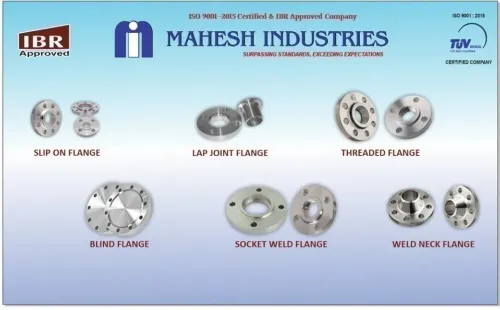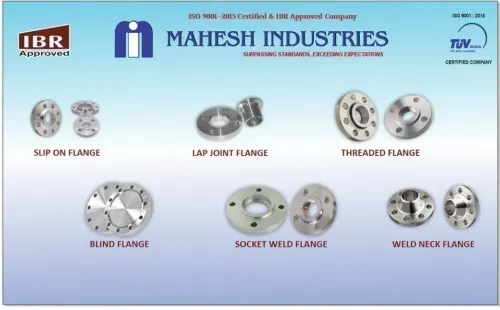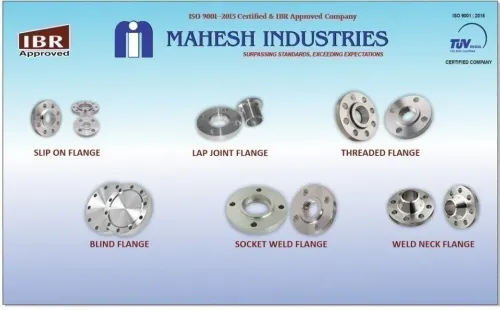

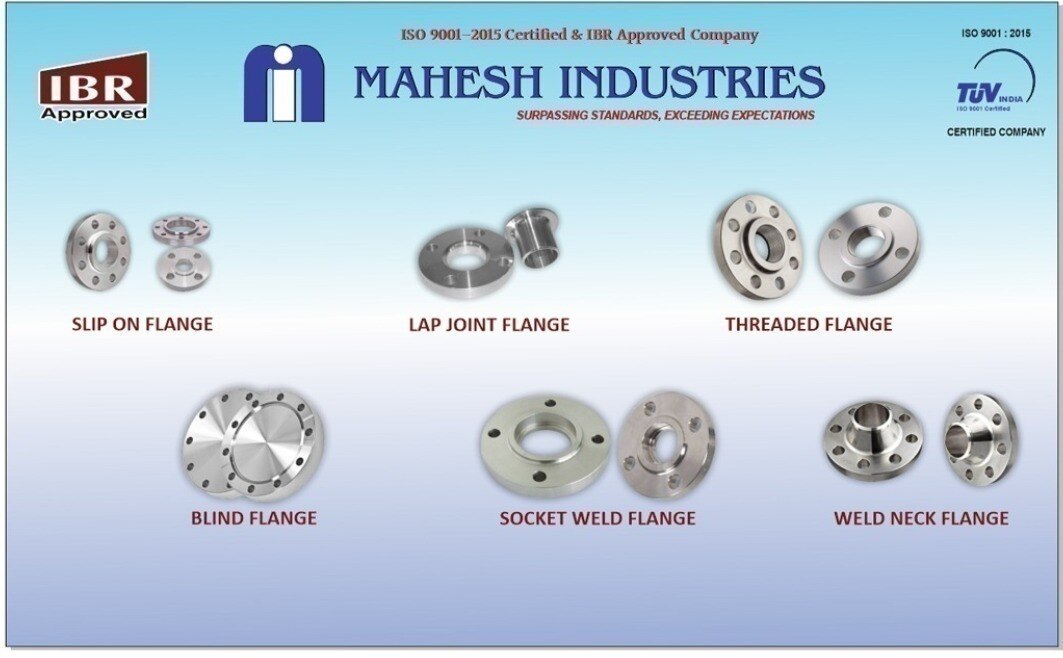
A lap joint flange quotation is incomplete if it names only the loose backing ring and ignores the stub end, drilling, facing, material, inspection documents, and delivery scope. By the end, you will be able to define the assembly, compare local suppliers on an equal basis, and reject a technically unsuitable or deceptively low quotation.
Key takeaways
- Specify pipe size, pressure class, material grade, facing, and applicable standard.
- Compare lap joint flange price against material, testing, machining, and delivery terms.
- Check dimensions, markings, certificates, weld quality, and sealing faces before acceptance.
- Use lap joint assemblies where frequent dismantling or costly alloy pipe justifies them.
How does a lap joint flange assembly work, and when is it useful?
A lap joint assembly uses two parts: a loose backing flange and a lap-joint stub end. The backing flange slides over the pipe and backs the stub end; the stub end is butt-welded to the pipe, while its flared face provides the gasket seat and pressure-retaining sealing surface.
The loose flange supplies the bolting surface, but it is not normally the wetted pressure-retaining face. Therefore, a quotation for a lap joint flange must state whether it includes the stub end or only the loose backing ring.
Buyers choose this arrangement when frequent dismantling, difficult bolt-hole alignment, or spool rotation during installation would make a fixed flange inconvenient. A corrosion-service line can also use an expensive alloy or stainless-steel stub end with a carbon-steel backing flange where the design permits that material combination.
| Situation | Why the arrangement helps | Decision point |
|---|---|---|
| Frequent dismantling | The loose ring remains positioned while the joint is opened | Check gasket and bolt access |
| Difficult alignment | The ring can rotate to match bolt holes | Confirm clearance around the stub-end lap |
| Corrosion service | Only the wetted stub end needs the costly alloy | Verify galvanic, temperature, and code compatibility |
| High bending or external load | The joint itself may not provide enough stiffness | Consider a weld neck or another fixed arrangement |
Choose another arrangement when the flange connection must resist sustained bending, high external loads, or severe cyclic stresses through the flange itself. The stub-end weld and backing flange still require verification for pressure, temperature, corrosion, and fatigue.
If you plan to buy lap joint flanges in Navi Mumbai, ask for those design details before comparing prices.
Which flange type is better for your piping connection?
Choose a lap joint flange when you need to dismantle the joint, rotate a spool during alignment, or correct difficult bolt-hole positioning. Its loose backing ring makes installation flexible, but it is not a universal replacement: the stub end carries the sealing and pressure connection, and both components require design verification.
| Option | Main advantage | Better choice when |
|---|---|---|
| Weld neck flange | Long tapered hub distributes stress into the pipe | High bending, external loads, pressure, or cyclic service govern |
| Slip-on flange | Simpler, lower-complexity fabrication | Loads and fatigue demands are moderate |
| Socket-weld flange | Pipe seats inside an integral socket | Smaller-bore systems use socket-weld construction |
| Threaded flange | Avoids welding | Welding is unsuitable and service conditions permit threaded joints |
| Plate flange | Simple product form | Lower-demand fabrication meets the project specification and code acceptance |
| Lap joint flange | Loose ring supports alignment and rotation | Frequent dismantling, spool rotation, or bolt-hole alignment matters |
For severe mechanical loading, a fixed weld neck is often stronger than a lap joint arrangement. Select a threaded flange only after checking leakage, temperature, vibration, and corrosion limits; a threaded connection that suits installation may fail the service duty.
Do not select the backing flange independently of the stub end. Ask the designer whether the project requires an MSS SP-43 short-pattern stub end or an ASME B16.9 butt-welding fitting configuration; do not assume they are interchangeable.
Ask any lap joint flange manufacturer to quote the ring and stub end as separate line items, with their standards, dimensions, materials, and pressure basis stated.
What must you specify on a lap joint flange enquiry?
A supplier needs enough data to quote a physically compatible assembly, not just a nominal size and a lap joint flange price. Send this numbered fit-check checklist:
1. State nominal pipe size, governing dimensional standard, and pressure designation. Use ASME B16.5 for NPS 1/2 through NPS 24 when it governs, or ASME B16.47 for NPS 26 through NPS 60.
Do not mix ASME B16.5 drilling with EN 1092-1 dimensions, even when NPS and DN appear equivalent; the joint may be impossible to bolt.
2. Give the pressure class or PN designation, but do not treat Class 150 or Class 300 as a universal bar rating. Allowable pressure depends on material group, size, temperature, facing, and the applicable pressure-temperature table.
3. Identify the stub-end type and length, pipe outside diameter, flange bore, flange outside diameter, flange thickness, facing type and finish, bolt-circle diameter, number of bolt holes, and bolt-hole diameter.
4. Name the material specification for each component, such as ASTM A105/A105M, ASTM A350/A350M LF2, or an ASTM A182/A182M grade. State whether each item is forged or plate; “carbon steel” alone is insufficient.
5. Include gasket type, bolt material and size, lubrication, and tightening procedure when they fall within the quotation scope. Confirm that the gasket seals on the stub-end face and that the backing-ring bore clears its lap.
A complete enquiry lets you buy lap joint flanges in Navi Mumbai without discovering a drilling, bore, or pressure-rating mismatch after delivery.
How should you compare Navi Mumbai supplier quotations?
A low lap joint flange price is not a bargain until you know what arrives. Ask every lap joint flange supplier in Navi Mumbai whether the offer covers one loose backing ring, a stub-end-and-ring set, or a complete assembly. Compare identical material form, standard, facing, drilling, and grade.
| Quote basis | What it includes | Delivery line |
|---|---|---|
| Loose ring | Backing flange only | Stock availability |
| Stub-end set | Stub end plus backing ring | Manufacturing lead time |
| Complete assembly | Components plus specified processing and inspection | Split stock and production dates |
Require separate prices or explicit inclusions for:
- Machining, facing, heat treatment, testing, GST, packing, freight, and third-party inspection
- EN 10204 3.1 or 3.2 certificates, as the project demands
- PMI, hardness, impact, UT, dye-penetrant or magnetic-particle testing, and dimensional inspection
State “IBR required” or “non-IBR” and identify boiler-connected service where Indian Boiler Regulations apply. IBR is a compliance and traceability requirement, not simply a higher pressure rating.
For a lap joint flange manufacturer or heavy engineering flange supplier, check heat-number traceability, calibrated inspection records, controlled heat treatment, qualified welding procedures and welders for stub ends, and a documented nonconforming-product procedure. A catalogue pressure class proves none of these controls.
Split delivery into stock availability and manufacturing lead time for forged, stainless, low-temperature, welded, inspected, or IBR orders. Mahesh Industries can be compared with other Navi Mumbai sources only after these scope, technical, and document requirements match.
Related product
 | Lap Joint Flanges Mahesh Industries, a trusted name in flange manufacturing based in Navi Mumbai, offers high-quality lap joint flanges for diverse industrial... View product → |
What should you inspect before accepting the shipment?
Reject or quarantine the shipment before installation if its identity or fit is uncertain. Compare the marking, material grade, heat number, and material certificate with the purchase order; this final check confirms that the supplier’s documents describe the components delivered. If you buy lap joint flanges in Navi Mumbai, apply the same receiving standard.
- Measure outside diameter, bore, thickness, bolt-circle diameter, hole count, hole diameter, facing, and flange rotation.
- Check the stub-end type, length, lap dimensions, weld preparation, and bore transition. Insufficient length or excessive bore mismatch can prevent seating and bolt engagement.
- Confirm that the gasket seals on the stub end’s flange face, not on an incorrectly selected backing-ring face. Verify clearance between the backing-flange bore and stub-end lap.
- Confirm the specified bolt material, lubrication, gasket type, facing finish, and tightening procedure before assembly.
| Check | Evidence to accept | Failure risk |
|---|---|---|
| Marking and certificate | Matching grade, heat number, and certificate | Lost material traceability |
| Drilling and facing | Correct bolt circle, holes, diameter, rotation, and finish | Unboltable joint or leakage |
| Stub end and bore | Correct length, lap, weld preparation, transition, and clearance | Poor seating or inadequate bolt engagement |
| Assembly controls | Correct gasket, bolt lubrication, and verified tightening record | Leakage, bolt damage, or joint failure |
Record every nonconforming dimension before installation. Never force holes into alignment or compensate with an unsuitable gasket; wrong drilling or facing, inadequate bolt engagement, a wrong gasket, and unverified bolt tightening can turn an apparently complete delivery into a failed connection.
Frequently asked questions
How does a lap joint flange assembly work?
A loose backing flange slides over the pipe and supports a lap-joint stub end. The stub end is butt-welded to the pipe and provides the gasket seat and sealing face.
When is a lap joint flange useful?
Use it where you need frequent dismantling, pipe alignment adjustment, or a cost-effective connection for alloy-lined or corrosion-resistant pipe. The stub end remains in contact with the process fluid.
Which flange type is better for a piping connection?
Choose a lap joint flange for repeated disassembly and alignment flexibility. Choose a weld neck, slip-on, socket weld, or blind flange when the piping design requires a different stress, bore, welding, or closure arrangement.
What must you specify on a lap joint flange enquiry?
State nominal pipe size, pressure class, flange and stub-end standard, material grade, facing, schedule or wall thickness, bore, dimensions, quantity, inspection requirements, and delivery location.
How should you compare Navi Mumbai supplier quotations?
Compare like-for-like material, dimensions, pressure rating, facing, testing, documentation, GST, freight, lead time, payment terms, and replacement conditions instead of comparing only the quoted unit price.