
A male-female flange joint can help position and confine a gasket, but its value depends on temperature, pressure, thermal movement, maintenance practice, and exact face compatibility. You will be able to decide where the design earns its added matching and inspection burden, which specifications to put on the purchase order, and when a weld-neck or another facing is safer.
Key takeaways
- Use male-female flanges where gasket control matters during pressure and thermal cycling.
- Choose another facing when alignment, inspection, or field replacement outweighs radial gasket confinement.
- Match flange dimensions, pressure class, materials, facing tolerances, and gasket type.
- Qualify suppliers through material certificates, dimensional inspection, traceability, and applicable approvals.
Do male-female flanges improve reliability under power-plant conditions?
A male projection entering a female recess confines the gasket radially, giving the joint more positive gasket location than a simple flat-face connection. That support can reduce gasket movement, extrusion, and lateral displacement during steam pressure, vibration, and thermal cycling.
It improves the sealing arrangement, but it does not make a joint leak-proof or raise the flange’s pressure rating.
The main male female flange benefits are:
- More repeatable gasket positioning during assembly, reducing the chance of an off-centre gasket.
- Better resistance to gasket blowout where pressure, temperature, and bolt loading challenge the seal.
- Mechanical guidance between mating faces, which helps alignment when connected piping moves during heat-up and cool-down.
This design is worth considering for selected high-pressure, high-temperature steam, heat-exchanger, and process connections where gasket confinement matters. It is not automatically the best choice for every power-plant line. Many piping classes standardize on raised-face weld-neck or socket-weld flanges because those options offer easier inspection, broader stock availability, and simpler replacement.
If you are asking, “are male female flanges for worth using in power plant piping,” the answer is yes when the piping specification, gasket, and mating pair are designed together.
Check the flange material group and ASME pressure-temperature rating at the actual operating temperature; Class 600 or PN 100 alone does not prove suitability for hot steam. Select the gasket for the fluid, temperature, pressure, facing, and bolt load, using dimensions and construction identified under ASME B16.20 or ASME B16.21.
Repair and maintenance become liabilities when the matching half or correct gasket is unavailable.
Which power-plant lines benefit from this facing, and when should you choose another flange?
Male-female flange applications are strongest where gasket confinement matters more than interchangeability. Consider them for high-pressure steam, boiler feedwater, and selected condensate lines, especially near thermal cycling or vibration. They can also suit chemical-dosing lines and heat-exchanger connections where gasket positioning matters.
Cooling-water, fuel, and compressed-air lines usually use the plant’s standard raised-face or flat-face arrangement unless the piping class specifies otherwise.
- Choose the facing when the male projection and female recess are supplied as a matched pair, the gasket dimensions are documented, and resistance to gasket movement or extrusion justifies the added maintenance burden.
- Choose another facing when the plant stocks different flanges, frequent dismantling is expected, or a replacement half could be needed during an outage.
| Option | What it means | When it applies |
|---|---|---|
| Male-female | Projection enters a recess and confines the gasket | Selected steam, feedwater, condensate, chemical, or heat-exchanger joints |
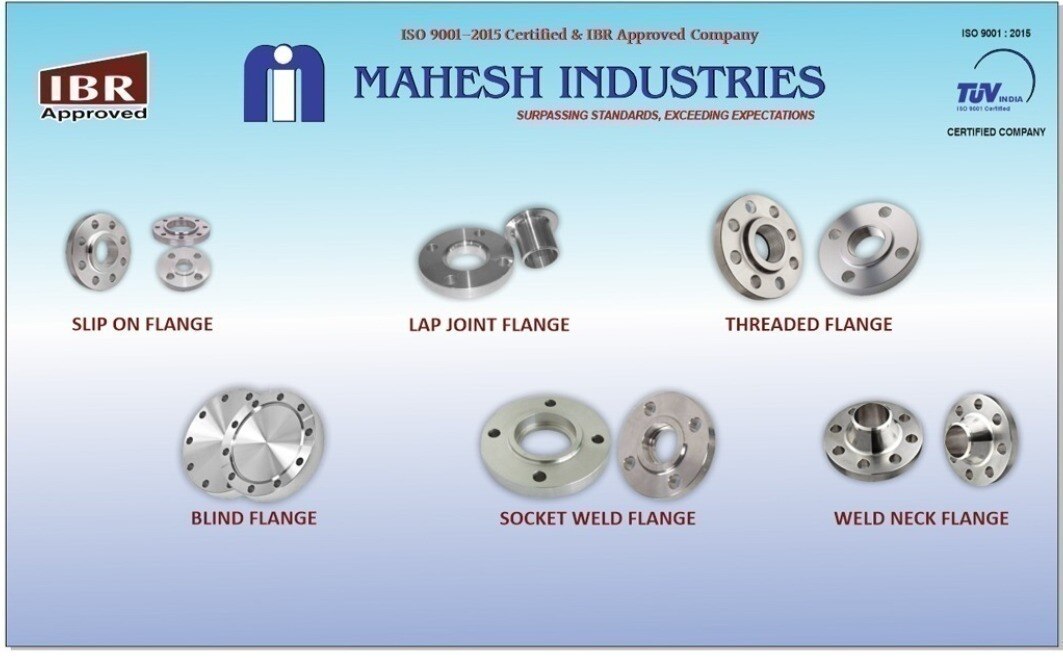
| Weld-neck | Butt-welded hub transfers load into the pipe | High-pressure, high-temperature lines needing fatigue resistance |
| Socket-weld | Pipe enters a socket and receives a fillet weld | Smaller-bore steam, fuel, air, and chemical lines |
| Slip-on | Pipe slips over the flange and is welded | Lower-cost, moderate-service utility piping |
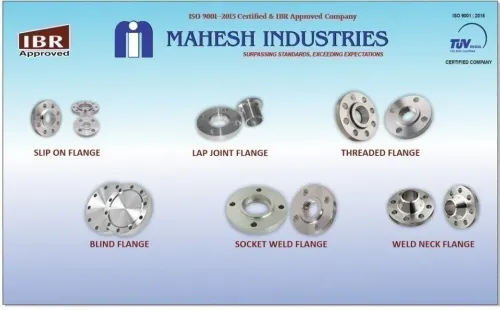
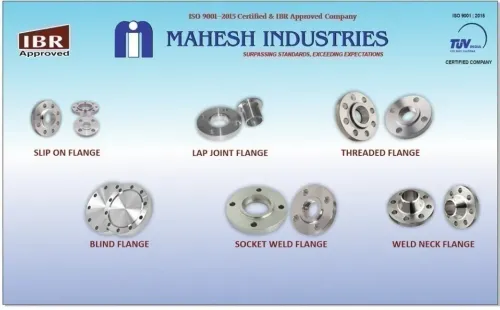
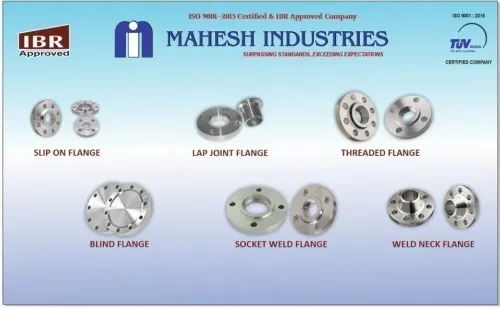
| Lap-joint | Loose flange backs a stub end | Frequent dismantling or corrosion-resistant pipe systems |
| Threaded | Flange screws onto pipe threads | Low-pressure services where welding is impractical |
| Flat-face | Full flat gasket contact without confinement | Cooling water and other low-pressure services |
The face style never raises the pressure rating by itself. Match the piping class, gasket, bolting, temperature, fluid, and maintenance practice before selecting it.
What installation and maintenance mistakes make the joint fail?
Leakage often begins before the bolts are tightened. Install the male projection into the matching female recess in the specified orientation; incomplete engagement leaves the gasket unsupported, while reversed or mismatched faces prevent proper seating. These male female flange benefits disappear when the mating geometry is wrong.
Check each joint for these failure points before tightening:
- Remove dents, radial scratches, corrosion scale, and weld spatter from both faces; damaged surfaces create leak paths.
- Use a new gasket with the specified inside diameter, outside diameter, thickness, material, and pressure-temperature suitability. A reused, compressed gasket can no longer recover to fill surface irregularities.
- Centre the gasket without forcing it against the projection or recess. An incorrect dimension can obstruct the bore or extrude into the pipe.
- Bring the flanges together parallel, then apply the controlled bolt-tensioning sequence in the gasket manufacturer’s installation procedure. Uneven compression tilts the flange and concentrates load on one side.
- Watch for flange rotation caused by pipe strain, unsupported valves, misaligned bolt holes, or excessive tightening. Rotation opens one side of the joint.
Thermal expansion, vibration, and repeated steam temperature changes can move connected pipe and fatigue the seal. Provide the specified supports, guides, and expansion arrangement; the facing does not absorb unplanned movement.
Maintenance becomes harder when a replacement has a different projection, recess depth, bore, pressure class, or facing designation. Check the flange markings, piping class, mating half, and gasket dimensions before breaking the joint; stocking only one half can leave the line out of service.
Which male-female flange specifications and standards must match?
A purchase order is incomplete if it says only “male/female flange.” The male projection and female recess must match in nominal size, pressure class or PN rating, facing designation, and governing dimensional standard. A same-size flange from another standard or manufacturer is not automatically compatible.
Use this male female flange specifications checklist:
- NPS or DN, flange type, and pipe bore or schedule
- ASME B16.5, ASME B16.47, EN 1092-1, or the project’s named standard
- Class 150–2500 or PN6–PN reckoned rating, with pressure-temperature basis
- Male projection and female recess diameter, projection length, recess depth, and engagement clearance
- Face outside diameter, flange outside diameter, thickness, bore, and bolt-circle diameter
- Bolt-hole quantity, diameter, spacing, and orientation
- Surface finish, including the specified Ra value
- Gasket construction, dimensions, and standard; ASME B16.20 covers metallic gaskets and ASME B16.21 nonmetallic flat gaskets
- Material grade, heat number, and compatible weld or pipe material
- Material test certificate, dimensional report, heat-number traceability, and required NDE
- Hydrostatic or other pressure-test evidence, plus third-party or statutory inspection records
| Matching route | Face designation to verify | Principal documents |
|---|---|---|
| ASME | Male/female dimensions under the named ASME standard | MTC, dimensional report, rating basis |
| EN | Tongue-and-groove or spigot-and-recess under EN 1092-1 | EN material certificate, dimensions, inspection records |
| Project-specific | Drawing-controlled dimensions and gasket details | Approved drawing, ITP, witness or statutory releases |
How should you qualify a supplier before approving the flange for plant service?
Approve the flange only after the supplier proves that the delivered pair matches your piping class, not merely the nominal pipe size. A male female flange supplier in Navi Mumbai, including Mahesh Industries, should answer the following requests with controlled documents:
1. Send the purchase-order drawing and dimensional report. Check NPS, ASME B16.5 or EN 1092-1 designation, pressure class or PN rating, outside diameter, bolt-circle diameter, bolt holes, thickness, bore, projection, recess depth, facing finish, and pipe schedule.
2. Provide the material test certificate for each flange, showing grade, chemical analysis, mechanical results, heat number, and applicable manufacturing standard. Reject certificates that cannot connect the reported heat number to the component.
3. Show heat-number traceability from the raw material certificate through forging, machining, inspection, and marking. The heat number on the flange must remain legible.
4. Provide pressure-temperature rating evidence for the specified material group, class, design temperature, and service fluid. A catalogue pressure alone does not qualify the component.
5. Identify the gasket construction, dimensions, and facing compatibility. Check whether the selection follows ASME B16.20 for metallic gaskets or ASME B16.21 for nonmetallic flat gaskets, plus the project bolt-load requirements.
6. Request inspection reports, non-destructive examination results when specified, and any third-party release note. Confirm the supplier has reviewed the project piping class, drawings, quality plan, and IBR scope for the material, manufacturing route, component, and intended boiler or steam-piping service.
Related product
 | Male Female Flanges Mahesh Industries is a leading manufacturer, supplier, and exporter of high-quality Male Female flanges. View product → |
Frequently asked questions
Do male-female flanges improve reliability under power-plant conditions?
They can improve gasket location by confining it radially, reducing movement and extrusion during steam pressure, vibration, and thermal cycling. Reliability still depends on correct gasket selection, alignment, bolting, surface finish, and installation torque.
Which power-plant lines benefit from male-female flanges?
They suit services where gasket control and resistance to lateral movement matter, including selected steam, condensate, feedwater, and high-temperature utility connections. Review temperature, pressure, fluid hazards, maintenance access, and the applicable piping code before specifying them.
When should you choose another flange facing?
Choose another facing when the mating geometry is unavailable, frequent field disassembly requires simpler alignment, inspection access is restricted, or the service and gasket manufacturer call for a different design. Do not mix incompatible male and female dimensions.
Which male-female flange specifications and standards must match?
Match the nominal pipe size, pressure class, flange dimensions, bore, facing profile, male projection, female recess, material grade, temperature rating, bolt pattern, gasket dimensions, and pipe-wall requirements. Confirm the governing standard, such as ASME B16.5 or ASME B16.47, and the plant piping code.
How should you qualify a male-female flange supplier in Navi Mumbai?
Request drawings, material test certificates, heat-number traceability, dimensional inspection reports, pressure-class identification, manufacturing records, and applicable IBR documentation. Check that the supplier controls facing dimensions, marking, packaging, and nonconformance handling before approving the flange for plant service.