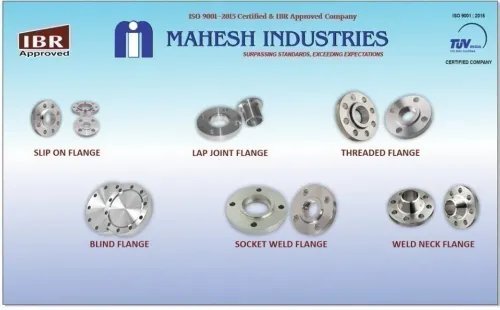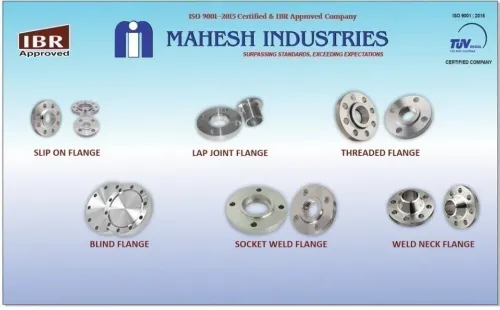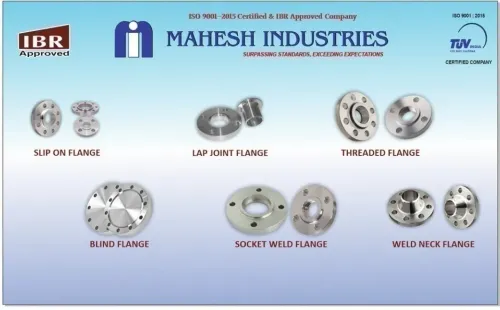

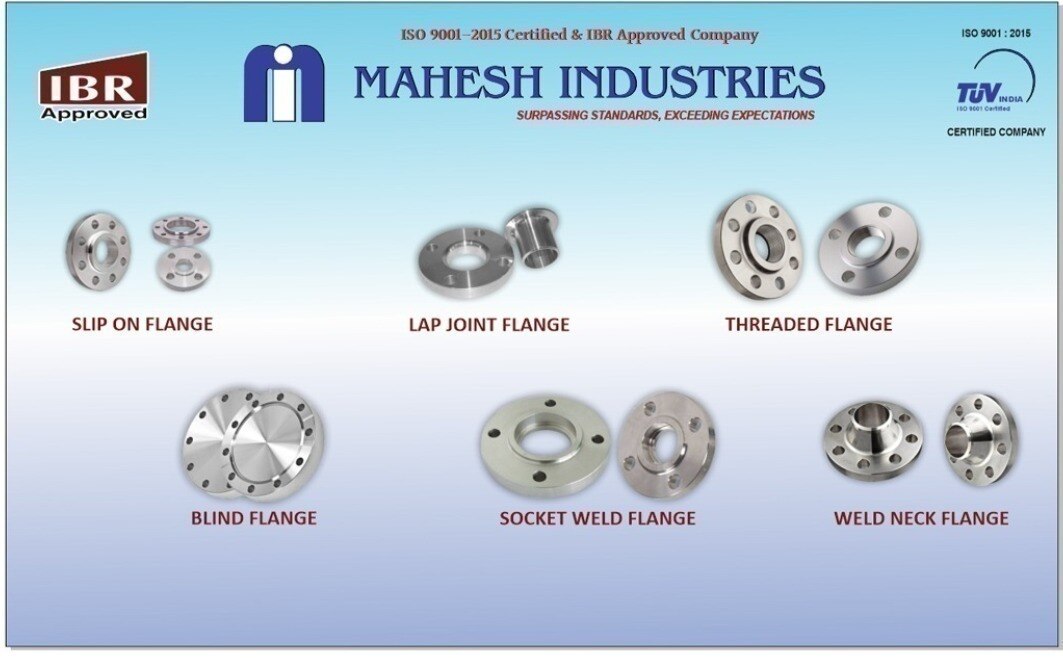
A power-plant blind flange purchase depends on more than nominal pipe size: the service, pressure class, facing, material, inspection route and documentation must all match the piping material class. By the end, you will know which flange type and standard to specify, how to compare blind flange price in Navi Mumbai, and how to screen a supplier before placing an order.
Key takeaways
- Specify ASME B16.5 dimensions, pressure class, facing and bore requirements.
- Match flange material to steam, feedwater, fuel or chemical service conditions.
- Request material certificates, dimensional reports and IBR documents where required.
- Compare quotes on manufacturing lead time, traceability, testing and total delivered cost.
Choose the right closure for each power-plant line
Blind flanges close a power-plant line when you need a removable, bolted barrier at a valve, vessel nozzle, spare branch, drain, vent, or equipment connection. They appear on boiler-feedwater, main-steam, condensate, cooling-water, fuel, compressed-air, and chemical-dosing systems during isolation, maintenance, commissioning, or future expansion.
A blind flange is not selected by NPS alone: pressure class, facing, gasket, bolting, design temperature, and code must match the mating flange.
| Option | What it means | When it applies |
|---|---|---|
| Blind flange | Solid bolted flange with no bore | Permanent or infrequently removed isolation at a flanged connection |
| Spectacle blind | Figure-eight plate with blind and open positions | Frequent positive isolation where operators can verify the position |
| Line blind | Removable solid plate installed between flanges | Shutdown isolation or process change when a spool can be opened safely |
| Blind cap | End closure fitted to a pipe end | Small-bore or socket-threaded terminations, not a flanged joint |
| Temporary test blind | Rated blank used during pressure testing | Hydrostatic or pneumatic testing; remove it before operating service |
Choose a spectacle blind or line blind where operation demands visible, repeatable isolation; use a test blind only for the approved test envelope. A blind cap suits a pipe-end closure, not an existing flanged connection.
If you buy blind flanges in navi mumbai, state the line service and whether the closure is operating hardware, maintenance isolation, or temporary testing. For IBR lines, add the applicable IBR inspection and traceability documents to the specification.
Build the dimensional and pressure-class specification
A supplier can match a blind flange only when your RFQ identifies the mating flange and the line design conditions.
Use ASME B16.5 for NPS 1/2 through NPS 24; for NPS 26 through NPS 60, use ASME B16.47 and state Series A or Series B. Specify the pressure class, such as Class 150 through Class 2500, and the facing.
Send these details before you ask to buy blind flanges in Navi Mumbai:
- NPS or DN, pipe outside diameter, and pipe schedule or required bore
- Flange outside diameter, thickness, bolt-circle diameter, number of holes, and hole diameter
- Facing type and dimensions, such as raised face or ring-type joint
- Mating flange standard, pressure class, gasket type, and bolt material
- Material grade, quantity, service temperature, design pressure, and line service
- Forged or plate-fabricated construction, IBR status, inspection and testing plan, delivery location, and required records
Do not select thickness by nominal pipe size alone. The class must match the mating flange, gasket, bolting, design pressure, and design temperature; otherwise the closure can leak or fail under load. For forged flanges, request heat-treatment and mechanical-test records.
For fabricated blanks, specify plate certificates, weld procedure, welder qualification, weld inspection, and post-weld heat treatment when the design requires it.
Match material to steam, water, fuel and chemical service
Select the flange material from the piping material class and service conditions, not from a plant-wide default such as ASTM A105. Check the design envelope and governing piping code before approving the grade.
- Steam: Use the specified carbon-steel or alloy-steel grade for the temperature and pressure range. ASTM A105 is common for forged pressure-containing flanges, but it does not prove suitability for high-temperature steam. Confirm allowable stress, heat treatment and the project material class.
- Feedwater, condensate and cooling water: Match the grade to water chemistry and corrosion allowance. Carbon steel may suit treated water, while stainless steel or another corrosion-resistant alloy may be required where chlorides control the risk.
- Fuel: Confirm compatibility with the fuel, operating temperature and fire-risk requirements. The line class may require carbon steel, low-temperature material or stainless steel instead of A105.
- Chemical dosing: Select the grade against chemical concentration and temperature. Verify galvanic compatibility and whether a lining is required.
For an IBR-related line, “IBR-approved blind flange” is only a starting label. Require the applicable IBR requirement and inspection authority, plus any stage or final inspection.
Preserve the heat number stamped on the flange and link it to the material test certificate and inspection records. Lost traceability after machining or mixed-lot packing can weaken the IBR file.
Ask an industrial blind flange manufacturer to state the grade, standard, heat treatment and traceability in the quotation.
Compare Navi Mumbai suppliers on price, manufacturing and traceability
A low blind flange price in Navi Mumbai does not prove a lower manufacturing cost. Normalize every quotation against the same material, construction, dimensions, pressure class, facing, heat treatment, NDE, PMI, coating, IBR documentation, packing and freight.
| Supplier type | Manufacturing evidence | Traceability evidence |
|---|---|---|
| Industrial blind flange manufacturer | Shows its own forging or plate-fabrication, heat treatment, machining and inspection records. | Links the heat number to test certificates, NDE, PMI and replacement controls. |
| Fabricator | Controls plate cutting, welding procedures, qualified welders, weld inspection and required post-weld heat treatment. | Provides the plate mill certificate, weld map, WPS/PQR, welder records and NDE reports. |
| Trader | Sources finished flanges and cannot show the producing facility’s process records. | Supplies certificates from elsewhere; verify the original maker and uninterrupted heat-number trail. |
Ask each bidder to state forged or plate-fabricated construction, not merely “blind flange.” For NPS 26 through NPS 60, check that the quotation identifies ASME B16.47 Series A or Series B, pressure class and facing. A generic “IBR approved” claim is not evidence; require the specified IBR inspection, material certificates, heat traceability and inspection authority.
Use the same RFQ schedule with:
- NPS or DN, class or PN rating, material and quantity
- Facing, bore or pipe schedule, service temperature and dimensional standard
- IBR status, inspection and testing plan, required documents, delivery and freight
Mahesh Industries belongs on your comparison sheet only after it supplies this same evidence, allowing an equal comparison with local fabricators and traders.
Related product
 | Blind Flanges Mahesh Industries is a leading manufacturer of high-quality blind flanges, designed to close the ends of piping systems effectively. View product → |
Send an RFQ that protects the purchase and IBR file
Your RFQ must define the flange and the evidence that will enter the IBR file. A catalogue phrase such as “IBR-approved blind flange” is not enough. If you plan to buy blind flanges in Navi Mumbai, require the supplier to quote against a complete schedule.
1. State NPS or DN, ASME B16.5 class or PN rating, dimensional standard, flange series, facing, bore or pipe schedule, material grade, quantity, design pressure, service temperature, gasket and bolting requirements, delivery location and date.
2. Require the quotation to identify forged or fabricated construction and whether the price includes forging, heat treatment, machining, sealing-face protection, NDE, PMI, coating, packing, freight and third-party inspection. Ask whether the item is ex-stock or still awaiting manufacture, testing or inspection.
3. Specify the IBR requirement, inspection authority, hold points and documents: heat-number traceability, material test certificate, heat-treatment record, dimensional report, test results, PMI report where required, approved drawings and release certificate. The supplier must link each flange marking and heat number to its certificate.
At receipt, match NPS, class, facing, thickness, bolt-hole pattern and bore against the approved drawing. Check the flange stamp, heat number, material grade, quantity, gasket face and visible damage before signing delivery acceptance. Reject mixed-lot packing or certificates that cannot be tied to individual markings.
A supplier’s documentation discipline matters more than local stock when choosing a blind flange supplier for power plant in navi mumbai.
Frequently asked questions
How do you choose the right blind flange for a power-plant line?
Identify the line service, design pressure, design temperature, pipe size, flange standard, facing and the required isolation point before ordering.
What details belong in a blind flange specification?
State the standard, nominal size, pressure class, facing type, material grade, bolt-hole pattern, thickness, bore or raised-face dimensions and inspection requirements.
How should flange material be matched to power-plant service?
Select material against the line’s temperature, pressure, corrosion risk and fluid, such as steam, feedwater, cooling water, fuel or chemical dosing.
What should you compare among blind flange suppliers in Navi Mumbai?
Compare price alongside manufacturing capability, delivery time, dimensional accuracy, material traceability, testing records and IBR documentation when the line requires it.