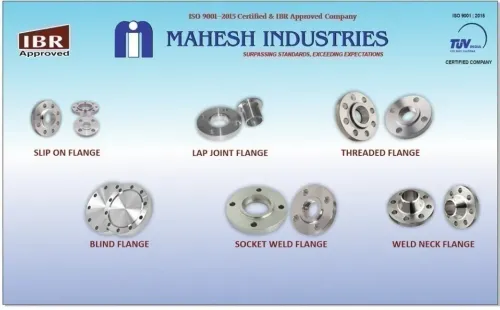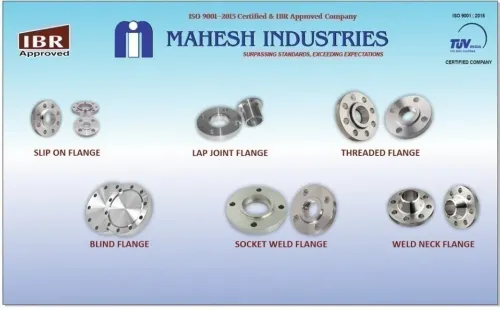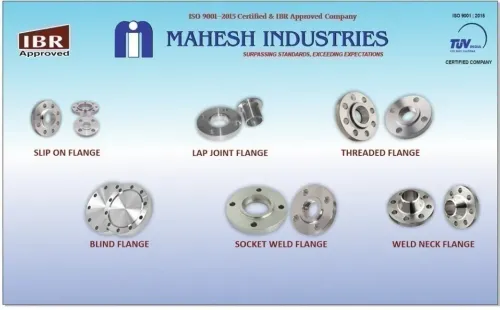

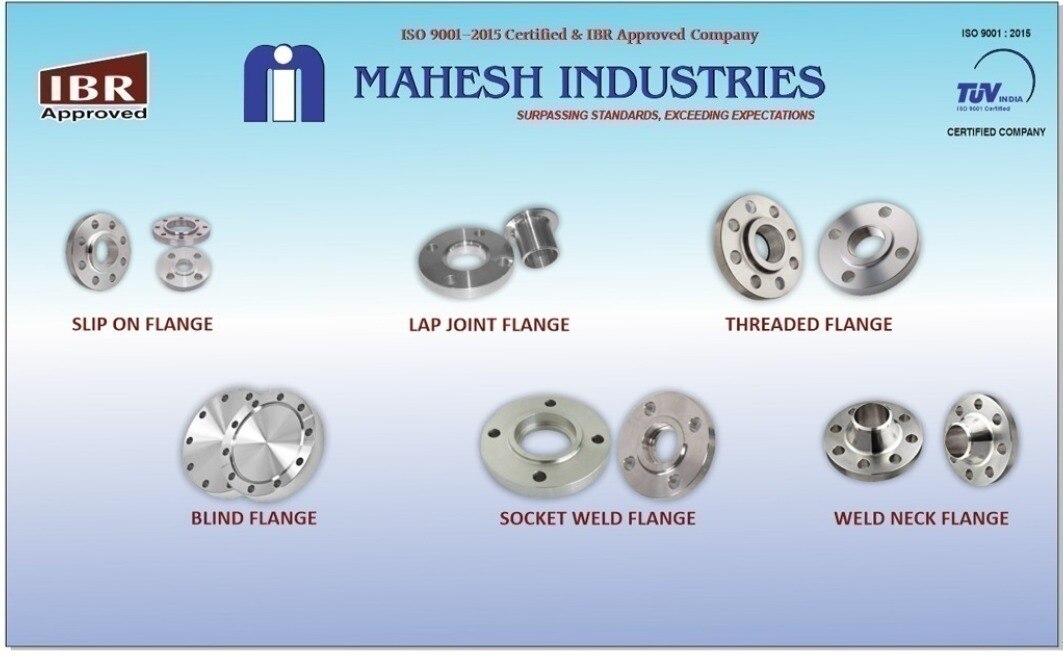
A refinery flange choice depends on more than nominal pipe size and pressure class: thermal cycling, vibration, fluid hazards, welding access, inspection and the piping code all change the answer. By the end, you will be able to match each flange type to service severity, verify its dimensional and pressure-rating basis, and prepare a quotation that exposes costly differences.
Key takeaways
- Choose weld neck flanges for severe pressure, temperature, cycling and fatigue service.
- Use butt-weld details to reduce local stress and improve leak resistance.
- Compare inspection access, installation effort and maintenance before selecting slip-on flanges.
- Specify the piping code, pressure class, material, dimensions and weld requirements.
Which flange type suits refinery service severity?
Choose a weld neck flange when refinery piping faces high pressure, high temperature, thermal cycling, vibration, bending loads, fatigue, or hazardous process fluids. The tapered hub and butt-welded joint provide a smoother load path into the pipe than a slip-on flange, reducing local stress concentration at the connection.
Weld neck is not automatically required for every refinery line; use the piping stress analysis and project specification to confirm the choice.
| Option | Main advantage | Choose it when |
|---|---|---|
| Weld neck | Tapered hub and butt weld distribute stress more continuously | Hydrocarbon, hydrogen, steam, high-temperature, high-pressure, cyclic, vibrating, erosive, or high-integrity lines |
| Slip-on | Easier fit-up, rotatable bolt-hole alignment, lower initial item cost | Lower-severity utility or process service with modest pressure, temperature, bending, and fatigue demands |
| Slip-on limitation | Two fillet-weld locations depend on insertion depth and internal-weld quality | Avoid it when internal ledges, difficult inspection, seal-weld access, or fatigue performance create a concern |
A slip on flange refinery piping connection can remain practical where operating conditions are stable and maintenance access is straightforward. Its apparent saving narrows when internal and external fillet welds require extra inspection, corrosion control, or outage work.
For weld neck vs slip on flanges for refineries, specify the actual pipe outside diameter, wall thickness or schedule, and required bore transition. A nominal-size-only quotation can create a bore mismatch or internal ledge that interferes with pigging, flow, or corrosion control.
How the weld connection changes stress and leak risk
The decisive difference is load path: a weld neck flange carries pipe forces through a full-penetration butt weld and a tapered hub, while a slip-on flange transfers them through two fillet-welded joints around a sleeve-like fit.
The taper spreads the change in stiffness over a longer length, reducing the local stress concentration at the flange-to-pipe junction. A bore matched to the pipe’s inside diameter and wall thickness also avoids an abrupt internal step that can disturb flow, erode the weld area, or intensify turbulence.
The butt weld remains a fatigue-sensitive detail, but its geometry is easier to analyse as a continuous pipe connection.
| Feature | Weld neck flange | Slip-on flange |
|---|---|---|
| Stress path | Tapered hub into butt weld and pipe wall | Flange barrel and two fillet welds |
| Cyclic loading | Better suited to repeated thermal expansion and bending | More sensitive to local peak stress and weld workmanship |
| Leak exposure | One primary weld joint with controlled penetration | Two weld locations, including an internal weld where specified |
| Fit-up risk | Bore and weld-end alignment must be exact | Insertion depth and internal weld access govern performance |
The slip-on arrangement is practical when loads, temperature swings, vibration, and hazard consequences are modest. Its internal fillet weld can leave a crevice or irregular bead, raising corrosion and inspection concerns; an external weld does not erase that weakness.
This weld neck flange comparison is a design decision, not a size-for-size substitution: ASME B31.3 stress analysis and the project specification decide whether the added fatigue margin is necessary.
Compare installation, inspection and maintenance before choosing
A slip-on flange refinery piping installation may cost less at the purchase stage, but two weld locations increase fabrication, inspection and corrosion-control work. A weld neck flange needs more precise fit-up and a qualified butt weld, yet its joint is easier to assess as a continuous pipe-to-flange weld.
| Option | Welding work | Inspection and maintenance |
|---|---|---|
| Weld neck | Align the bore and bevel, control root gap and weld penetration, then complete one butt weld through the tapered hub. | Examine the butt weld using the project-specified visual, surface and volumetric methods, such as MT or PT and RT or UT. Repair requires cutting out the flange and rewelding the pipe. |
| Slip-on | Fit the pipe to the specified insertion depth, weld the outside fillet, and complete the internal fillet or seal weld where the piping specification requires it. | Inspect both fillets, although the internal weld is harder to access and measure. Check for lack of fusion, crevices and corrosion at the bore; replacement still requires cutting the pipe, despite easier initial alignment. |
| Both | Use qualified welders, approved WPS and compatible consumables, then clean and protect the joint. | Confirm flange face condition, bolt-hole alignment, gasket seating and final leak-test records during maintenance. |
That is the practical weld neck flange comparison for hydrocarbon, hydrogen, steam and cyclic service: the weld neck usually demands tighter fabrication control, while the slip-on shifts effort into internal-weld access and long-term corrosion monitoring.
For lower-severity lines, its rotating fit-up can save time; for high bending, vibration or thermal cycling, the tapered hub can reduce repeated repair risk. A nominal-size-only quote is unsafe for either choice; verify bore, pipe schedule, face and rating.
Use the piping code, rating table and joint details together
A flange marked “ASME” is not a complete selection. Match the line’s NPS, pressure class, material group, design temperature and joint geometry to the governing standards before choosing weld neck or slip-on flanges for refineries.
| Standard | Controls | Selection consequence |
|---|---|---|
| ASME B16.5 | Dimensions, facings and pressure-temperature ratings for NPS ½–24 | Use it for standard refinery flanges within this size range |
| ASME B16.47 | Dimensions and ratings for NPS 26–60 | Identify Series A or Series B; do not substitute B16.5 dimensions |
| ASME B16.25 | Butt-welding-end dimensions and preparation | Check the weld-neck end against pipe outside diameter, wall and weld detail |
| ASME B31.3 | Piping design, flexibility, loads, stress and examination | Confirm that the joint survives pressure, temperature, vibration and connected-equipment loads |
Read the B16.5 or B16.47 pressure-temperature table for the flange material group and design temperature. Class 150 is not 150 psi at every temperature, and bolts, gasket, equipment rating or external piping loads can reduce the allowable limit.
Then verify the joint detail. Specify the weld-neck bore for the actual pipe outside diameter, schedule and required internal transition; a nominal-size-only order can create a ledge that disrupts pigging, corrosion control or flow. For a slip-on flange, confirm the required internal and external fillet welds and seal-weld requirement.
Use B31.3 stress and flexibility results to make the final choice. Thermal cycling, vibration or high bending loads can justify the weld neck; a slip-on remains practical when calculated loads, temperature and inspection requirements permit it. A rating-table match alone does not prove suitability.
What to specify when requesting refinery flanges
A request for quotation should make two ostensibly identical flanges impossible to confuse. State the dimensional standard: ASME B16.5 covers NPS ½ through NPS 24, while ASME B16.47 covers NPS 26 through NPS 60. “ASME flange” alone is not enough.
Include these details in the request:
- NPS, pipe outside diameter, wall thickness or schedule, bore, and any specified internal-diameter transition
- ASME Class or PN rating, plus the required dimensional standard
- Raised-face or ring-type-joint facing, including facing finish where specified
- Material specification, grade, product form, heat treatment, and service temperature
- Refinery service description, including sour, hydrogen, steam, cyclic, erosive, or high-temperature duty
- IBR or non-IBR status, required NDE, and inspection authority
- Coating or preservation requirements, delivery date, and required certificates
| RFQ field | Weld neck flange comparison | What to verify |
|---|---|---|
| Bore | Match the pipe OD, wall, and transition | No internal ledge or pigging obstruction |
| Inspection | Butt-weld geometry needs specified NDE | Methods, acceptance criteria, reports |
| Records | IBR orders need more than a generic MTC | Heat number, tests, dimensional report, IBR certificate |
When comparing a weld neck flange supplier in Navi Mumbai, ask Mahesh Industries for the heat number, dimensional report, NDE records, and IBR documentation listed in the quotation. Compare those records line by line, not just the unit price; a cheaper slip-on or mismatched-bore offer can shift cost into welding, inspection, and rework.
Related products
 | Weld Neck Flanges Mahesh Industries, based in Navi Mumbai, is a reputed manufacturer and supplier of high-quality weld neck flanges. View product → |
 | Long-Weld-Neck-Flanges Mahesh Industries, based in Navi Mumbai is a trusted name in the manufacturing of Long Weld Neck (LWN) Flanges, known for precision, strength, and... View product → |
Frequently asked questions
Which flange type suits severe refinery piping service?
Weld neck flanges suit high pressure, high temperature, thermal cycling, vibration, bending loads, fatigue and hazardous fluids better than slip-on flanges.
How does the weld connection affect stress and leak risk?
A weld neck flange uses a tapered hub and butt-welded joint, creating a smoother load path and reducing local stress concentration at the pipe connection.
What should you compare before choosing a refinery flange?
Compare installation effort, weld inspection, access for maintenance, thermal and mechanical loads, leak consequences and the service conditions defined by the piping code.
What information should you include when requesting refinery flanges?
State the piping code, pressure-temperature rating, flange standard, material grade, nominal pipe size, facing, schedule, dimensions, weld details and inspection requirements.