
A ring type joint flange is only reliable when its material, manufacturing route, groove, ring gasket, bolt pattern, and inspection records match one another. By the end, you will know how the flange is produced, how to specify it for quotation, and how to verify that the supplied assembly is suitable for installation.
Key takeaways
- Match the flange standard, ring number, groove dimensions, and facing before ordering.
- Specify material grade, size, pressure class, schedule, bore, and inspection documents in the RFQ.
- Use RTJ connections for high-pressure sealing; choose raised-face flanges for easier general service.
- Confirm heat certificates, dimensional reports, marking, packing, and dispatch date before payment.
From steel blank to finished RTJ groove
A ring type joint flange begins with a certified steel heat and a controlling standard, such as ASME B16.5, ASME B16.47, or API 6A where applicable. The ring type joint flange process then converts the selected blank into a flange whose groove, bore, bolt circle, and face match the approved drawing.
- Review the standard, pressure class, bore, material grade, and service temperature; verify the mill certificate and heat number.
- Forge the billet, roll a ring, or cut the blank from plate, then apply the specified heat treatment.
- Rough-machine the outside diameter, bore, flange thickness, bolt circle, bolt holes, and raised face.
- Finish-machine the annular RTJ groove to the specified ring number, width, depth, radius, and surface finish.
- Perform dimensional, visual, hardness, PMI, ultrasonic, magnetic-particle, or other specified examinations; mark the flange and preserve it for dispatch.
| Route | Manufacturing difference | Practical effect |
|---|---|---|
| Forged | Compresses heated billet into the flange shape, retaining directional grain flow | Higher material utilisation and a stronger, more uniform section, with forging records and larger machining allowances |
| Plate-built | Cuts the flange from certified plate before machining | Useful for suitable sizes and lower quantities, but grain flow is not forged and plate thickness, cutting, and inspection records control acceptance |
The groove is not interchangeable with a raised-face gasket seat. Inspect its dimensions against the matching metallic gasket standard, such as ASME B16.20, before release.
How the standard, ring, and flange face must match
An RTJ joint fits and seals only when the flange standard, pressure class, bore, bolt pattern, groove geometry, ring number, and gasket material are specified as one matched set.
NPS or DN alone is not enough: ASME B16.5 and ASME B16.47 can differ in flange dimensions, while API 6A applies to particular wellhead and Christmas-tree equipment.
| Item | Specify | Failure if mismatched |
|---|---|---|
| Flange standard | ASME B16.5, ASME B16.47, API 6A, or the named project standard | Bolt holes, thickness, groove location, and tolerances may not align |
| Flange dimensions | NPS or DN, pressure class, bore or pipe schedule, outside diameter, bolt circle, hole diameter, and thickness | The flange may not fit the pipe or mating flange |
| RTJ groove | Exact groove profile and dimensions from the controlling flange drawing | The ring can sit high, bottom out, or fail to compress |
| Metallic ring | ASME B16.20 ring number, material grade, and identification marking | The gasket may not enter the groove or may contact the wrong surfaces |
| Flange face | RTJ groove facing, not raised face or flat face | A spiral-wound, graphite, or soft sheet gasket will not create the intended seal |
ASME B16.20 governs metallic RTJ gasket dimensions, materials, markings, and identification; it does not replace the flange standard. Select a ring material compatible with pressure, temperature, and process fluid, and confirm its hardness is suitable for the flange groove. Never force a ring into a damaged or contaminated groove.
When RTJ is the right connection—and when it is not
Select RTJ when the joint must retain a metallic seal under high pressure, high temperature, or severe cyclic service. The ring seats in a machined groove and withstands conditions that can defeat a soft sheet gasket. It is not a stronger substitute for every flange.
| Connection | Main sealing method | Choose it when | Main limitation |
|---|---|---|---|
| RTJ | Metallic ring in an annular groove | High pressure, high temperature, or critical leak control demands it | High machining accuracy and careful assembly are essential |
| Raised-face | Spiral-wound, graphite, or other compressed gasket | You need broad availability, easier replacement, and lower assembly cost | The gasket and facing must suit pressure and temperature |
| Flat-face | Full-face soft or compressed gasket | Fragile equipment or low-pressure service requires even bolt loading | Do not pair it with an RTJ groove and ring |
A buyer seeking a ring type joint flange for manufacturing in Navi Mumbai should confirm that local machining matches the supplied forging, plate, or ring. Local groove cutting does not prove local steel production or complete manufacturing.
During assembly, treat the ring and groove as one matched set:
- Specify the RTJ ring number, material, hardness, and temperature range with the flange.
- Select a ring softer than the groove material so bolt load seats the ring without gouging the flange.
- Clean the groove, ring, and flange faces; remove rust, paint, burrs, and impact marks.
- Align the pipe and bolt holes without forcing the flange into position.
- Use the specified bolt tightening sequence and torque; uneven loading can crush the ring on one side.
- Never reuse a flattened ring or substitute a spiral-wound, graphite, or flat gasket.
What to put in a Navi Mumbai RFQ before asking for a price
Put the complete technical and commercial data in the RFQ before asking for a price; otherwise two flanges carrying the same “RTJ” description can differ in bore, pressure rating, material, groove, and manufacturing route.
| RFQ field | State this specifically | Why it changes the quote |
|---|---|---|
| Size and rating | NPS, ASME Class 600, 900, 1500, or 2500, and ASME B16.5 or B16.47 | Determines outside diameter, thickness, bolting, and machining time |
| Sealing geometry | RTJ ring number, ASME B16.20 ring material, groove details, and flange facing | Prevents a ring and groove that do not match |
| Bore and form | Pipe schedule or exact bore, weld-neck or blind type, and forged, plate-built, or ring construction | Stops silent substitution of a different product form |
| Material and service | ASTM/ASME grade, service temperature, corrosion allowance, sour-service requirement, and NACE compliance | Changes steel source, heat treatment, testing, and documentation |
| Inspection and documents | PMI, ultrasonic or magnetic-particle examination, hydrotest support, MTC, marking, IBR documents, and third-party inspection | Adds inspection time and certificate costs |
| Commercial terms | Quantity, delivery destination, packing, freight, taxes, and required dispatch date | Converts an ex-works price into a usable delivered price |
Ask whether the supplier has a finished flange or only a machinable blank, and request the heat number, certificate holder, manufacturing location, and any subcontracted operation. A ring type joint flange supplier in Navi Mumbai should also separate flange price from RTJ gasket price and list heat treatment, inspection, packing, and freight inclusions.
Mahesh Industries should receive the same specification if you are comparing its offer with another supplier. A ring type joint flange quotation is comparable only after these fields match.
Related product
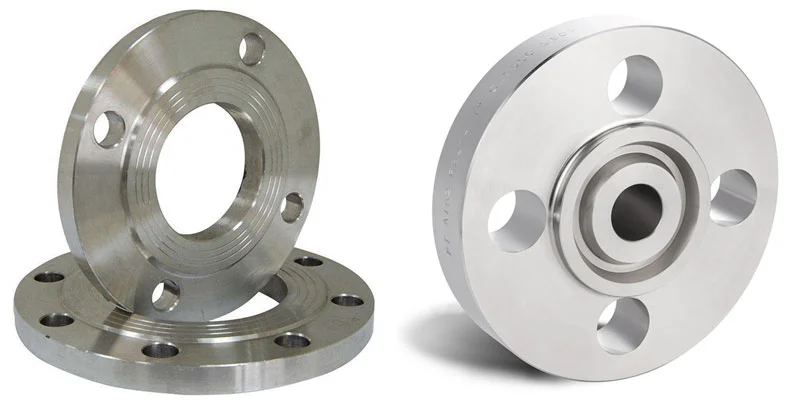 | Ring Type Joint Flanges We Mahesh Industries are leading manufacturers, suppliers, and exporters of premium Ring Type Joint (RTJ) flanges, known for their durability and... View product → |
How to verify availability, documents, and dispatch readiness
Do not accept “in stock” as proof of readiness. For RTJ flange availability in Navi Mumbai, ask the supplier to confirm the physical quantity, finished-flange or machinable-blank status, exact size, class, bore, ring number, material grade, heat number, and promised dispatch date in writing.
1. Match the stock against your purchase specification. Unusual ring numbers, large diameters, special alloys, non-standard bores, and IBR documentation are commonly made to order rather than held locally.
2. Require traceability from the finished flange back to the steel heat. The material test certificate should state the heat number, chemistry, mechanical results, product form, and applicable material standard; verify that the same number is stamped or securely transferred to each flange.
3. Confirm inspection status before release. Request dimensional inspection records for the bore, bolt holes, flange thickness, and RTJ groove, plus PMI, ultrasonic or magnetic-particle reports, hydrotest support, and third-party inspection records when your purchase order requires them.
4. Define the IBR deliverable precisely. Establish whether you need IBR-accepted material, an approved manufacturer or process, competent-authority inspection, or documents for a specific boiler or steam-piping installation. A generic certificate of conformity does not replace those records.
5. Inspect preservation and dispatch controls. The groove needs a protective cover, clean dry packing, corrosion protection, clear marking, and a packing list; confirm freight, destination, insurance, and the dispatch date before accepting the supply.
Frequently asked questions
What happens during the ring type joint flange manufacturing process?
A certified steel blank is cut, forged or machined, heat-treated when specified, and then machined to the approved bore, bolt circle, flange face, and RTJ groove dimensions. Final inspection checks dimensions, surface condition, markings, and required documents.
How do the RTJ standard, ring, and flange face need to match?
The flange standard and pressure class determine the groove profile, dimensions, bolt pattern, and facing. Select a compatible ring number and material, then verify the groove width, depth, diameter, and surface finish against the approved drawing or standard.
When is an RTJ flange the right connection?
RTJ flanges suit high-pressure or high-temperature service where a metal ring provides a reliable seal under heavy bolt load. They are not the first choice for ordinary low-pressure piping where raised-face gaskets offer simpler installation and reuse.
What should a Navi Mumbai RTJ flange quotation include?
State the standard, nominal size, pressure class, material grade, bore or pipe schedule, flange type, facing, RTJ groove and ring number, quantity, testing, inspection documents, delivery location, and required dispatch date.
How can you verify RTJ flange availability and dispatch readiness?
Ask for the material heat number, mill test certificate, dimensional inspection report, applicable test records, photographs of markings and finished grooves, packing details, and a confirmed dispatch date. Check that the documents match the ordered size, class, material, and quantity.