
The choice depends on how the pipe is joined, how the line responds to heat and pressure cycles, and whether the connection sits in a main energy path or a small-bore auxiliary service. By the end, you can match each flange type to the line duty, specify the joint correctly, and request evidence that separates ASME manufacture from IBR compliance.
Key takeaways
- Choose weld neck flanges for cyclic, high-energy piping and smoother stress transitions.
- Use socket weld flanges on smaller-bore lines where access and installation suit the design.
- Specify pressure class, material grade, dimensions, welding requirements and inspection documents.
- Check temperature, fatigue, bore alignment and code requirements before placing the order.
How the Two Flange Connections Carry Load
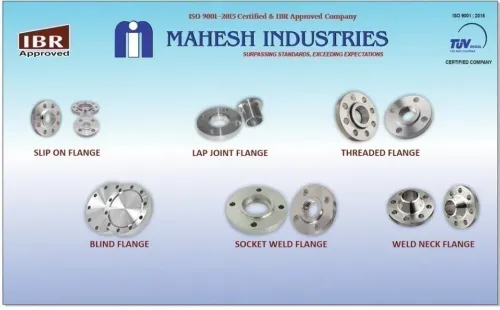
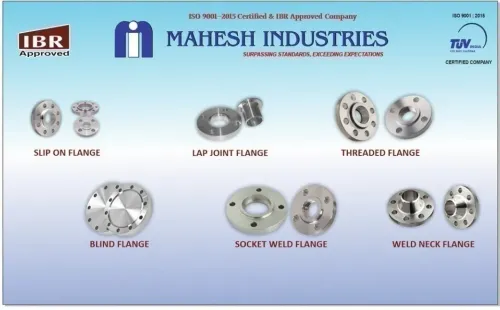
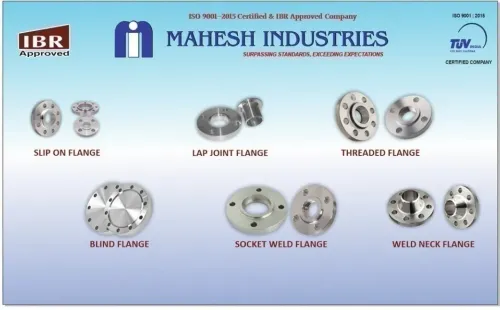
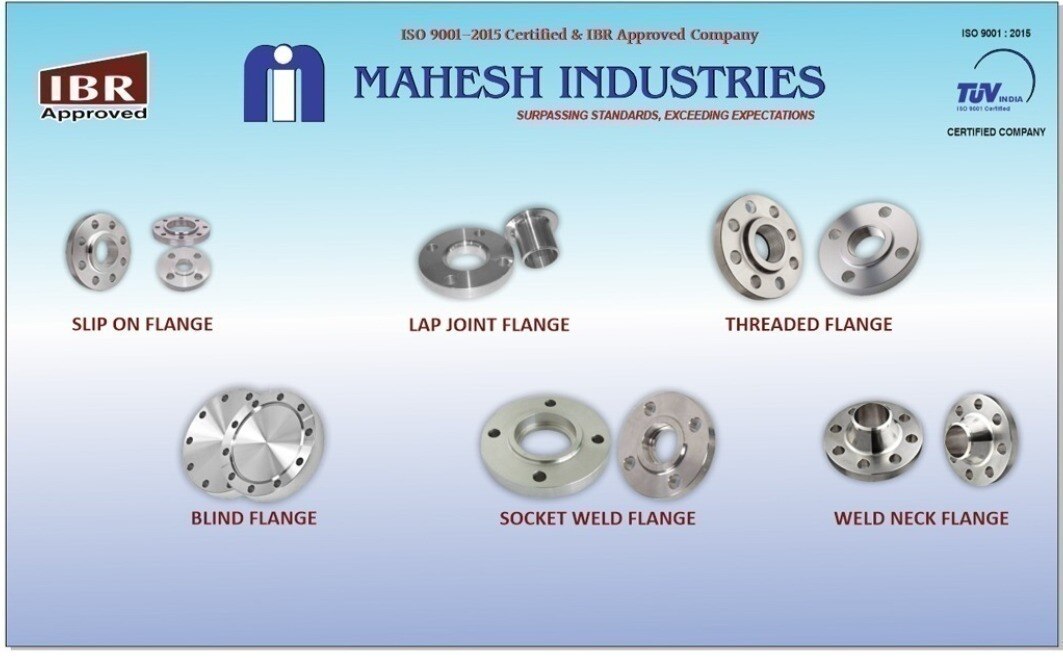
The two connections carry pipe and pressure loads through different weld geometries. A socket-weld flange receives the pipe into a machined recess, where an external fillet weld joins the pipe to the flange hub. A weld-neck flange uses a tapered hub and a full-penetration butt weld, creating a smoother transition from pipe wall to flange.
| Feature | Socket-weld flange | Weld-neck flange |
|---|---|---|
| Pipe connection | Pipe enters a socket and is fillet-welded | Pipe meets the tapered hub in a butt weld |
| Load path | More abrupt at the socket and fillet weld | Smoother through the tapered hub and bore |
| Main concern | Local stress concentration, crevice and fatigue at the socket end | Welding quality, bore alignment and transition geometry |
| Suitable starting point | Selected small-bore, low-cycle services | High-pressure, high-temperature or cyclic services |
For socket weld flanges or weld neck flanges in Ahmedabad, screen the line’s design pressure, metal temperature, vibration and thermal cycles before choosing the connection. Main steam, reheat and high-pressure feedwater duties normally point toward a weld neck because repeated expansion and contraction intensify fatigue at abrupt geometry.
Small-bore drains, vents, instruments and utilities may justify a socket weld when the line class and piping code allow it.
Do not confuse connection type with flange facing. Raised face, flat face and ring-type joint arrangements require their own gasket, finish and bolting specification. Class 300 alone does not establish the allowable pressure.
Why Weld Neck Flanges Suit Cyclic, High-Energy Piping
For main steam, hot-reheat, cold-reheat, boiler, turbine and high-pressure feedwater connections, weld neck flanges are normally the stronger default. Their tapered hub carries the pipe into a full-penetration butt weld, creating a smoother transition than the abrupt socket shoulder and external fillet weld.
That geometry matters during repeated heat-up, load changes and shutdowns. Thermal expansion, pressure cycling and vibration create local stresses at discontinuities; the socket recess and fillet-weld profile can intensify them. Weld neck flanges spread the load more gradually through the hub and pipe wall, reducing a common fatigue concern in high-energy piping.
- Main steam and reheat lines see severe temperature changes, so fatigue resistance and controlled weld quality matter alongside pressure containment.
- Boiler and turbine connections experience pressure forces, vibration and thermal movement, making a smooth bore-to-hub transition easier to defend in the design review.
- High-pressure feedwater lines face high pressure, pump-induced vibration and repeated operating cycles, so the butt-welded connection supports a more inspectable joint.
The socket weld versus weld neck flanges choice still depends on the line class, design temperature, material allowable stress and piping flexibility analysis.
A power plant flange comparison based only on Class 300 or Class 600 is incomplete: ASME B16.5 ratings change with material group and temperature, while the governing piping or boiler code sets welding and NDE requirements.
Where Socket Weld Flanges Fit—and How to Install Them
Use socket weld flanges for small-bore drains, vents, instrument connections, utility lines and selected low-cycle auxiliary services—not for every line below a chosen diameter. Socket weld flange applications still require checks for pressure, steam temperature, vibration, thermal cycling, fluid cleanliness and erosion.
| Service | Suitability | Reconsider in favour of a weld neck flange when |
|---|---|---|
| Drains and vents | Suitable for low-cycle, small-bore lines | The line sees flashing, erosion, severe vibration or repeated thermal shocks |
| Instrument and impulse connections | Suitable where clean, stable service is maintained | The fluid is corrosive, dirty or prone to deposit at the socket shoulder |
| Utility and auxiliary lines | Suitable after checking the piping code and duty | Pressure-temperature conditions or cycling approach the main process-system duty |
| Steam or feedwater branches | Only for selected low-cycle, small-bore branches | The branch carries high energy, frequent starts or significant vibration |
Under ASME B16.5, socket weld flanges are commonly listed from NPS 1/2 through NPS 3. Confirm the exact size and Class table before ordering; a larger line is not automatically eligible. Class 300 also does not mean one pressure limit: the rating changes with flange material group and temperature.
Before welding, control the fit-up precisely:
- Insert the pipe without driving it hard against the socket shoulder.
- Leave approximately 1.6 mm (1/16 in.) of expansion gap before welding.
- Keep the pipe square, concentric and free from burrs, oil and scale.
- Verify insertion depth and tack alignment, then complete the external fillet weld using the qualified procedure.
Omitting the gap traps expansion at the shoulder, increasing local stress and cracking risk during cyclic service.
What an Ahmedabad Buyer Must Put in the Purchase Specification
Write the line item against the piping class, not simply “Class 300 flange.” State the exact NPS, bore, wall schedule, flange type and ASME B16.5 dimensional table; socket-weld flanges commonly cover NPS 1/2 through NPS 3, while weld-neck flanges cover a wider range.
Ask a socket weld flange supplier in Ahmedabad to provide these records and confirmations:
- Material specification and grade, such as ASTM A105, A182 F316 or the project-approved equivalent, with design temperature and service recorded.
- Pressure class with the ASME B16.5 material group and temperature basis; Class 300 does not have one allowable pressure for every alloy.
- Face type, such as raised face, flat face or ring-type joint, plus finish, gasket standard and bolting grade.
- Welding details: socket insertion gap, fillet-weld dimensions, or weld-neck bevel to ASME B16.25; include qualified welding procedure, filler metal, welder qualification and post-weld heat treatment where required.
- Dimensional report covering bore, flange thickness, bolt-circle diameter, holes and face condition.
- Inspection plan identifying PMI, visual, dimensional, hardness and specified MT, PT, UT or RT examinations.
- Heat-number traceability from flange marking to the material test certificate, heat-treatment record and inspection report.
For IBR service, identify the boiler, steam pipe, feed pipe or fitting system first. Require approved material, manufacturer and inspector documentation, certificates and marking separately; ASME B16.5 compliance is not IBR approval. Mahesh Industries should be assessed against this evidence set, not against the word “forged” alone.
Related products
 | Weld Neck Flanges Mahesh Industries, based in Navi Mumbai, is a reputed manufacturer and supplier of high-quality weld neck flanges. View product → |
 | Socket-Weld-Flanges Mahesh Industries is a leading manufacturer and supplier of high-quality socket weld flanges, known for their precision engineering and durability. View product → |
A Line-by-Line Decision Check Before You Order
Make the final choice line by line: match flange type to temperature, pressure, cycling, vibration, bore size and code requirements—not to a universal safety ranking. A power plant flange comparison that uses nominal pressure class alone can select the wrong connection.
1. Main steam, hot-reheat and cold-reheat: specify weld-neck flanges unless the piping design proves another arrangement suitable. Their tapered hubs and butt-welded transitions better suit thermal cycling, fatigue and vibration.
2. High-pressure feedwater: start with weld-neck flanges, then confirm the line class, design temperature, allowable stress and piping-flexibility analysis. A high pressure rating does not remove thermal-expansion loads.
3. Drains and vents: consider socket-weld flanges for small-bore, low-cycle lines after checking steam temperature, pressure, erosion and vibration. Do not approve them from diameter alone.
4. Instrument connections: use socket-weld flanges when the instrument line is small, clean and stable, but choose weld neck for severe cycling or pulsation.
5. Utility and auxiliary lines: select socket weld for suitable low-energy services; use weld neck where contamination, vibration or repeated heating raises fatigue risk. Under ASME B16.5, socket-weld dimensions commonly cover NPS 1/2 through NPS 3, so verify the exact size and class table.
6. Before release, record facing, finish, gasket standard and bolting separately from the socket weld versus weld neck flanges decision. For socket welds, require the approximately 1.6 mm expansion gap; forcing pipe against the shoulder increases cracking risk.
Frequently asked questions
How do socket weld and weld neck flanges carry pipe loads differently?
A socket weld flange holds the pipe in a machined recess and transfers load through an external fillet weld. A weld neck flange transfers load through a tapered hub and full-penetration butt weld.
Why are weld neck flanges suited to cyclic, high-energy piping?
Their tapered hub and full-penetration butt weld provide a smoother transition from the pipe wall, reducing the stress concentration associated with abrupt geometry changes during pressure and temperature cycling.
When do socket weld flanges fit power plant piping?
Socket weld flanges fit smaller-bore services where the design permits a socket connection, installation access is adequate and the fillet-weld geometry meets the project code and inspection requirements.
What should an Ahmedabad buyer include in a flange purchase specification?
State the flange type, nominal size, pressure class, facing, material grade, schedule or bore, applicable standard, temperature and service conditions, welding requirements, inspection scope and required documentation.
Related product
 | Asme B16.5 Flanges Mahesh Industries is a trusted manufacturer, supplier, and exporter of ASME B16.5 flanges, designed to meet global standards for pressure and... View product → |