
An RF flange order normally covers the flange body and its machined dimensions, not the gasket, bolts, pipe or inspection package unless the quotation states otherwise. By checking the standard, size, drilling, material, documents and delivery scope line by line, you can compare a raised face flange quotation and confirm that it will fit your piping system.
Key takeaways
- Specify NPS or DN, standard, pressure class, RF finish, bore, and material grade.
- Request dimensional drawings, material certificates, test reports, and IBR documents with the quotation.
- Match the gasket inner diameter, outer diameter, thickness, and facing to the RF flange.
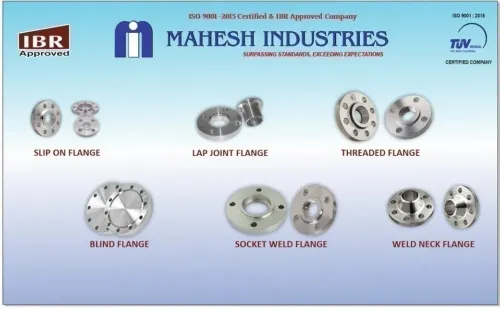
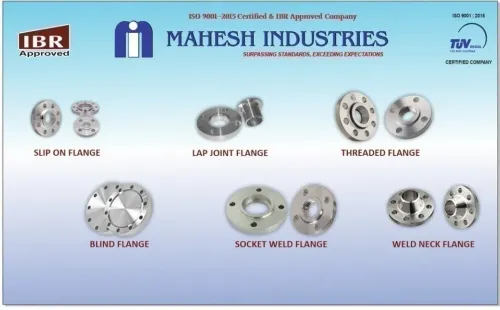
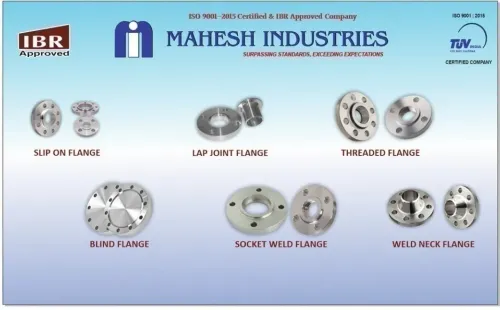
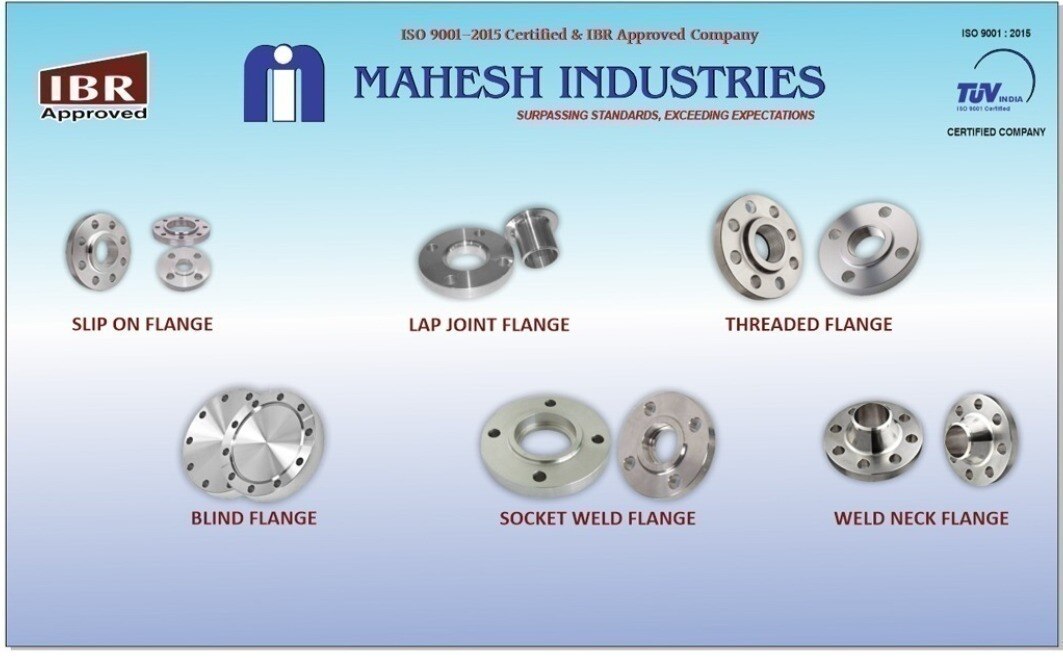
- Choose weld neck, slip-on, blind, socket weld, or threaded flanges for the installation method.
What should a raised face flange order specify?
A quotation for raised face flange specifications must identify the flange type, NPS or DN, governing dimensional standard, pressure class or PN rating, RF finish, bore, thickness, outside diameter, bolt-hole count, bolt-hole diameter and material grade.
- State whether construction is forged or plate, and name the ASTM or ASME material specification and grade, such as ASTM A105 or ASTM A182 F316. Add pipe schedule or required bore, service temperature and quantity.
- Treat NPS and DN as nominal size systems, not interchangeable measurements. “150# RF” and “PN16 RF” use different rating and drilling systems, so neither designation confirms the other.
- Specify the RF height against the selected standard and class. Under commonly used ASME B16.5 geometry, it is about 1.6 mm for Classes 150 and 300, and about 6.4 mm for Classes 400 through 2500.
| Standard | Nominal range | Quotation implication |
|---|---|---|
| ASME B16.5 | NPS 1/2 through NPS 24 | Use for standard smaller flanges |
| ASME B16.47 | NPS 26 through NPS 60 | Use for larger flanges |
Classes 150, 300, 600, 900, 1500 and 2500 are pressure classes, not universal operating pressures. Allowable pressure depends on the material and temperature tables.
The RF face is part of the flange. Gaskets, stud bolts, nuts, matching pipe and spectacle blinds are separate unless the quotation expressly includes them.
What must you send and receive in a raised face flange quotation?
Send these lines in your enquiry to a raised face flange supplier in Navi Mumbai:
- Quantity; NPS or DN; pipe schedule or required bore; pressure Class 150, 300, 600, 900, 1500 or 2500, or PN; flange type; material grade and product specification.
- Face finish or serration; dimensional standard; drilling system; service temperature; delivery location; required delivery date.
- Inspection requirements, including any PMI, hardness, ultrasonic, dye-penetrant, magnetic-particle or hydrostatic testing; documentation requirements.
- State whether you need gaskets, bolts, nuts or other accessories. They are separate from the flange unless listed.
Your raised face flange quotation should show:
- Size, standard, class or PN, flange type, bore, material, RF finish and drilling.
- Quantity, unit price, taxes, freight or delivery basis, packing, quotation validity, payment terms and delivery period.
- Shipment scope: bare machined flanges, temporary rust prevention, and domestic or export packing.
“RF flange” alone leaves out the bore, drilling, standard and rating needed to confirm interchangeability. Confirm painting, galvanizing, special coating, end protection, individual tagging and raised-face protection in writing. Coating must not contaminate the sealing surface.
When specified, request a material test certificate showing heat number, chemical composition and mechanical results; dimensional inspection report; certificate of conformity; marking record; and third-party inspection records. These tests are not automatic inclusions. Ensure the offer names each one.
How do you verify RF flange fit and gasket compatibility?
Before installation, lay the supplied flange beside its mating flange and compare the dimensions, not just the label “RF.” Confirm that both use the same nominal size, pressure class or PN system, governing standard, and drilling arrangement.
| Item | Supplied flange | Mating flange |
|---|---|---|
| Nominal size and rating | NPS or DN; Class or PN | Same size and rating system |
| Standard and drilling | ASME B16.5/B16.47, EN 1092-1 or JIS; outside diameter, bolt-circle diameter, hole count and hole diameter | Same standard and matching values |
| Body dimensions | Thickness and bore | Compatible thickness and bore |
| Sealing face | Raised-face diameter, height and finish | Matching raised-face geometry and finish |
ASME B16.5, ASME B16.47, EN 1092-1 and JIS systems can assign different drilling, thickness and face dimensions to similar nominal sizes. Therefore, “RF” alone does not prove compatibility. If you are searching for raised face flange for details in navi mumbai, ask for the standard and drilling system before ordering.
Select the gasket from the joint conditions, not from the RF label. Spiral-wound gaskets suit many process joints; ring-type gaskets belong with ring-type joint arrangements, not ordinary RF joints. Compressed-fibre or PTFE gaskets may suit lower-temperature or chemically specific services.
Check pressure, temperature, fluid, face finish, gasket construction and bolt load; ASME B16.20 covers many metallic gasket forms, while ASME B16.21 covers non-metallic flat gaskets.
Do not tighten an RF flange directly against a flat-face flange without engineering review: the raised contact can bend or damage the flat flange and change gasket loading. Confirm the piping class and equipment nozzle before purchase.
Which RF flange type suits the installation?
Choose the flange by installation conditions, weld access and maintenance plan—not by the label alone. A weld-neck flange has a tapered hub and full-penetration butt weld, making it the stronger choice for cyclic, high-pressure or high-temperature service when welding and radiographic inspection access are available.
| RF type | Installation advantage | Main limitation |
|---|---|---|
| Weld neck | Best stress and alignment control in severe service | Requires qualified butt welding and inspection access |
| Slip-on | Slides over pipe and simplifies fabrication | Fillet welds provide less joint strength and alignment control |
| Socket-weld | Suits smaller-bore pipe where internal access is limited | Socket depth, fit-up and weld inspection need control |
| Threaded | Avoids welding on threaded pipe | Threads can leak or loosen under vibration and must match the pipe |
| Lap-joint | Loose flange rotates for bolt alignment and repeated dismantling | A separate stub end carries the weld and sealing details |
| Blind | Closes a line, nozzle or vessel opening for isolation, testing or future extension | Thickness and pressure rating must suit the opening |
Use a lap-joint assembly where frequent maintenance makes bolt alignment and removal costly; the flange itself does not provide the stub end’s sealing or weld geometry. Choose a blind RF flange only after checking pressure, temperature and required thickness.
For smaller pipe with restricted internal access, a socket weld is practical, but poor fit-up can create crevices or an unacceptable weld. Threaded RF flanges belong only on compatible threaded piping in service with controlled vibration and leakage risk.
The mating equipment nozzle and piping class decide RF versus flat face, not supplier convenience. Do not bolt them together without engineering review: the raised face can bend or damage a flat flange and change gasket loading.
Ask an RF flange manufacturer in Navi Mumbai to confirm the mating standard, drilling and facing arrangement before fabrication.
What inspection and IBR evidence should accompany the supply?
“Included” means little until the quotation names the evidence supplied with the flange. For ordinary industrial service, ask for these documents:
- Material test certificate showing heat number, material grade, product form, chemical analysis, tensile strength, yield strength and elongation
- Dimensional inspection report against the governing standard
- Certificate of conformity
- Permanent marking details, including the heat number
- Packing or preservation records
| Evidence | Included meaning | Buyer’s check |
|---|---|---|
| Material certificate | Traceable chemical and mechanical results | Match heat number to flange marking |
| Dimensional report | Measured dimensions against the named standard | Check bore, drilling, thickness and RF geometry |
| Conformity certificate | Supplier’s statement that the order matches its specification | Compare it with the purchase order |
PMI, hardness testing, ultrasonic examination, dye-penetrant testing, magnetic-particle testing, hydrostatic testing and third-party inspection are extra requirements. Name the method, acceptance criteria, inspector and report format in the purchase order; otherwise, do not assume they are included.
IBR approval is not proved by “steel,” “forged” or “RF.” For boiler or steam service, require the applicable Indian Boiler Regulations material documentation, heat traceability and inspection or certification route. Verify that the material grade, product form and intended use are accepted for the installation.
A non-IBR flange can suit non-boiler piping but must not be called IBR-approved.
When assessing Mahesh Industries as a raised face flange supplier in Navi Mumbai, ask for separate prices for the base flange, testing, inspection, IBR documentation, coating, packing and freight. This is the same discipline expected from any RF flange manufacturer in Navi Mumbai.
Related product
 | Raised Face Flanges Mahesh Industries is a trusted manufacturer, supplier, and exporter of high-quality Raised Face (RF) Flanges, known for their strength, durability,... View product → |
Frequently asked questions
What should a raised face flange order specify?
State the flange type, NPS or DN, ASME B16.5 or EN 1092-1 standard, pressure class or PN rating, RF finish, bore, thickness, outside diameter, bolt-hole details, and material grade.
What must you send and receive in a raised face flange quotation?
Send the line size, design pressure and temperature, fluid, material, standard, quantity, facing, bore, delivery location, and document requirements. Receive a priced dimensional and technical offer with delivery terms and inspection documents listed.
How do you verify RF flange fit and gasket compatibility?
Compare the flange standard, pressure class, bolt circle, hole diameter, raised-face dimensions, bore, and gasket dimensions. Confirm the gasket material and thickness suit the fluid, temperature, pressure, and facing finish.
Which RF flange type suits the installation?
Use weld neck flanges for demanding cyclic or high-pressure service, slip-on flanges for simpler fabrication, blind flanges for isolation, socket weld flanges for smaller bore piping, and threaded flanges where welding is impractical.
What inspection and IBR evidence should accompany the supply?
Request the purchase specification, dimensional inspection report, material test certificate, heat number traceability, relevant NDE or pressure-test reports, and IBR approval documents when the installation falls under Indian Boiler Regulations.