
Power-plant flange leaks often begin with a misplaced gasket, an incompatible facing, or a specification that names only the pipe size. You will be able to identify where tongue-and-groove joints help, compare them with other flange faces, and order a matched pair with the correct dimensions, gasket, materials, and inspection records.
Key takeaways
- Use matched tongue-and-groove faces to control gasket movement and extrusion.
- Specify the flange standard, pressure class, material, facing, and gasket together.
- Inspect tongue, groove, gasket seating, bolt tightening, and alignment before pressure testing.
- Confirm IBR documentation for boiler and steam lines before ordering the flange pair.
Why tongue-and-groove faces suit power-plant piping
A projecting tongue on one flange enters the matching recessed groove on the other, trapping the gasket within a defined seating area rather than leaving it exposed across the full flange face. This controls gasket positioning, limits lateral movement, and improves resistance to extrusion or blowout under service pressure.
These tongue groove flange advantages matter during maintenance: the confined gasket location makes reassembly more repeatable when the faces, gasket thickness, and bolt tightening are correct. Tongue groove flanges for power plants still have the same pressure-temperature rating assigned by their flange standard; the face design does not increase that rating.
The groove is part of the pressure boundary, not a cosmetic recess. Corrosion, impact marks, excessive machining, foreign material, or a damaged tongue-to-groove fit can prevent correct gasket compression even when the bolt circle and outside diameter look right.
Check these conditions before treating the joint as reliable:
- Thermal cycling can relax the gasket or change flange contact.
- Vibration can work the joint and promote gasket movement.
- Pipe strain can pull the faces out of alignment.
- Uneven bolt tightening can rotate the flange, crush the gasket locally, or damage the tongue and groove.
A tongue flange must be paired with its matching groove flange. It cannot correctly mate with an ordinary raised-face or flat-face flange without redesigning the gasket arrangement.
Which plant services benefit, and how the faces compare
Boiler feedwater, condensate, cooling water, steam, fuel, chemical dosing, and high-temperature utility lines can benefit from controlled gasket location and repeatable assembly. These features simplify maintenance when technicians repeatedly break and remake joints.
- Boiler feedwater and condensate lines, where reliable reassembly limits outage work.
- Cooling-water and chemical-dosing lines, where gasket movement or fluid attack can create persistent leaks.
- Steam, fuel, and high-temperature utility lines, where pressure, temperature, steam quality, fluid chemistry, vibration, and thermal cycling govern the final face and gasket choice.
| Flange face | Gasket and mating arrangement | Practical comparison |
|---|---|---|
| Tongue-and-groove | Gasket sits in a defined recessed groove between matching faces | Controls location and limits lateral movement |
| Raised-face or flat-face | Gasket spans a broader face area | Easier to source, but offers less geometric restraint |
| Ring-type joint | Machined metallic ring groove accepts a ring gasket | Suits a separate metallic ring-joint design |
| Male-and-female | Male projection mates with a differently shaped female recess | Similar containment principle, but not interchangeable geometry |
Industrial tongue groove flanges are not a universal replacement for other faces. A tongue flange must be paired with its matching groove flange; it cannot be correctly joined to an ordinary raised-face, flat-face, male-face, female-face, or ring-type-joint flange without redesigning the joint and gasket arrangement.
Tongue groove flanges for power plants therefore require a matched-pair decision, not a size-only purchase.
How to specify the matched pair and gasket
Specify the matched pair, not merely the pipe size: industrial tongue groove flanges require identical NPS, pressure class, flange standard, material grade, bore, and facing geometry. The tongue groove flange advantages disappear when the two drawings do not agree.
- State NPS and pressure class. ASME B16.5 covers NPS 1/2 through NPS 24 in Classes 150, 300, 400, 600, 900, 1500, and 2500.
- For NPS 26 through NPS 60, specify ASME B16.47 and confirm tongue-and-groove availability against the project standard; otherwise treat the facing as an engineered detail.
- Record outside diameter, bolt-circle diameter, number of bolt holes, bolt-hole orientation, bore, facing dimensions, tongue depth, groove width, gasket seating surface, and surface finish.
- State the material grade and required certification.
Gasket selection must follow the confined geometry.
| Gasket type | Governing standard | Buyer’s check |
|---|---|---|
| Metallic gasket | ASME B16.20 | Confirm dimensions and seating for the groove |
| Nonmetallic flat gasket | ASME B16.21 | Confirm thickness, width, and seating area |
Do not substitute a generic raised-face spiral-wound gasket unless its dimensions and seating behaviour have been approved for this tongue-and-groove joint. Before installation or replacement ordering, compare the supplier drawing with the mating flange drawing.
A tongue flange cannot be correctly paired with a raised-face, flat-face, male-face, female-face, or ring-type-joint flange without redesigning the joint and gasket arrangement.
What installation and inspection checks prevent leakage
Inspect the flange at receipt, then repeat the checks in the field before assembly. A tongue groove flange for benefits power plant in Navi Mumbai depends on traceability and face condition, not size alone.
- Match the marking to the purchase order: nominal size, pressure class, material grade, heat or cast number, and standard.
- Record the bore, outside diameter, bolt-circle diameter, bolt-hole count and orientation, tongue depth, groove width, seating surface, and surface finish in the dimensional inspection record.
- Use positive material identification or equivalent grade verification when the project requires it. Trace the flange heat number to the material test certificate.
- Inspect the groove and tongue for corrosion, dents, raised metal, foreign matter, excessive machining, and impact damage. Reject a damaged pressure-boundary fit.
- Confirm the gasket type, dimensions, thickness, and material visually against the approved drawing and gasket specification.
Keep caps on both machined faces during transport and storage. Remove them only for inspection and assembly.
Before bolting, check flange parallelism, pipe alignment, gasket thickness, and free bolt fit. Apply the specified cross-pattern tightening sequence with calibrated equipment; uneven tightening can rotate the flange, crush the gasket locally, or damage the tongue and groove.
Marine exposure near Navi Mumbai requires storage protection, coating, corrosion allowance, suitable alloy selection, and planned inspection. It does not automatically require a different facing. These controls matter more than generic tongue groove flange advantages claims or a search for tongue groove flange for benefits power plant in Navi Mumbai.
How to buy the right flange pair for an IBR or non-IBR line
Do not reduce the request to “tongue groove flange for benefits power plant in Navi Mumbai” or order by size alone. A tongue-and-groove face is not IBR approval; IBR applicability depends on the equipment and piping service, not simply the phrase power plant.
1. State whether the line is inside the Indian Boiler Regulations boundary, then name the governing design code, nominal size, pressure class, flange standard, and applicable edition. Include material grade, heat-treatment condition, bore, and gasket standard.
2. Require the tongue groove flange supplier in Navi Mumbai to confirm the matched pair against your mating drawing. Specify the inspection plan: positive material identification or equivalent grade verification where required, dimensional inspection, tongue and groove dimensions, face finish, marking, and protection of machined faces.
3. Define the certification package before placing the order. Covered service may require a traceable material test certificate, heat or cast identification, dimensional records, inspection documentation, and authorised inspection or certification. Mahesh Industries can assess an IBR or non-IBR requirement when you submit the mating drawing and these documents.
At dispatch, check:
- Matched tongue and groove pair
- Compatible gasket to the specified standard
- Protected tongue and groove faces
- Legible size, class, material, and heat markings
- Traceable certificates linked to the heat or cast number
- Dimensional inspection records
A supplier’s drawing must match the mating flange before replacement or installation. A correct nominal size cannot rescue an incorrect face geometry, missing traceability, or an incomplete IBR package.
Related product
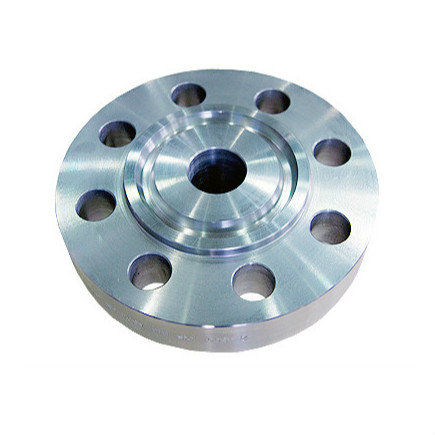 | Tongue Groove Flanges Mahesh Industries is a Indias leading manufacturer, supplier, and exporter of precision-engineered Tongue and Groove (T&G) flanges. View product → |
Frequently asked questions
Why do tongue-and-groove flanges suit power-plant piping?
The projecting tongue fits into the matching groove, locating the gasket and reducing lateral movement, extrusion, and blowout risk under pressure.
Which power-plant services benefit from tongue-and-groove flanges?
They suit services that need controlled gasket positioning, including steam, feedwater, boiler auxiliaries, condensate, and process piping when the design standard permits them.
How do you specify the matched flange pair and gasket?
State the flange standard, nominal size, pressure class, material, facing dimensions, tongue-and-groove orientation, gasket type, thickness, and service temperature.
What checks prevent leakage during installation?
Confirm matching tongue and groove dimensions, clean faces, correct gasket seating, flange alignment, even bolt tightening, and a documented pressure test.
How do you buy the right flange pair for an IBR or non-IBR line?
Identify the service and IBR boundary, then request material certificates, dimensions, pressure rating, heat number, inspection records, and IBR documentation where required.